Disney's Childhood Home: Not Just the Birthplace of the Animation King
Walt Disney was born in a two-story home in Chicago, but he eventually left, leaving the house behind. Who were the other occupants? And what does the house look like now?
September 2, 2025
Walt Disney looms large in history as a larger-than-life figure who made his mark on both the animation and theme park industries. Known for creating some of the most popular characters to ever exist, Walt Disney has certainly branded himself and his company into the minds of the inhabitants of the world.
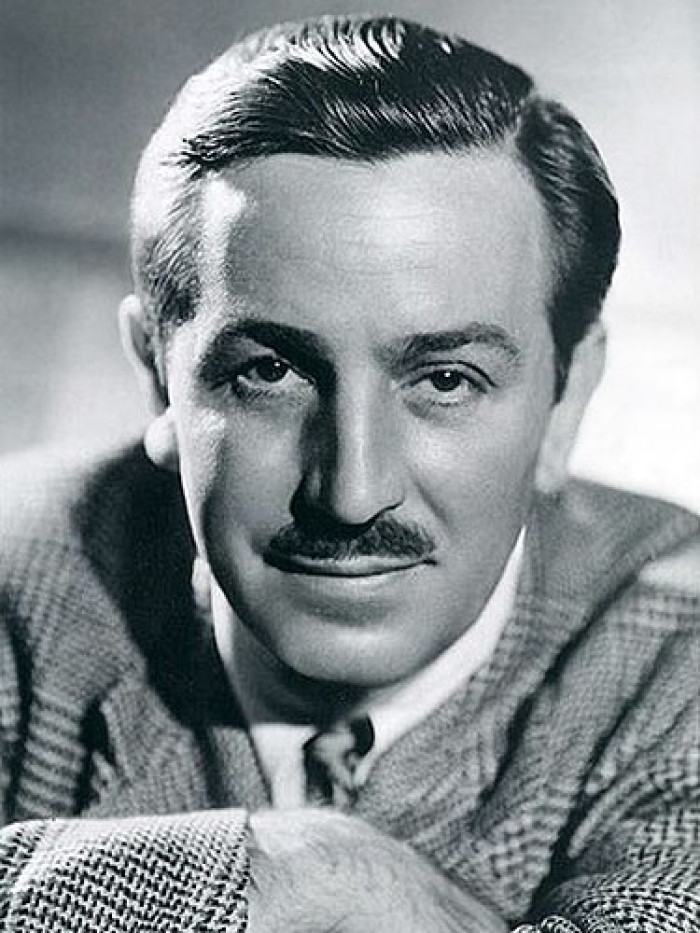
Walt Disney, c. 1946
When most people conjure up an image of Walt Disney, they probably think of an older gentleman with a pencil mustache and of what he had done in his later years. But what about when he was younger? Surely, the man who became famous for his theme parks and movies came from a high-class background? Maybe he grew up in a large house with many maids? Maybe he spent his childhood days riding ponies?
Not so, dear reader, for he was born in Chicago in 1901 to a carpenter and his family.
Now, we must first begin with Walt Disney's father, Elias, who arrived in Chicago to help build the 1893 World's Fair. After the fair, Elias decided to settle down and build his own home in the Windy City; Elias Disney was a carpenter after all, and who better to build his house than him?
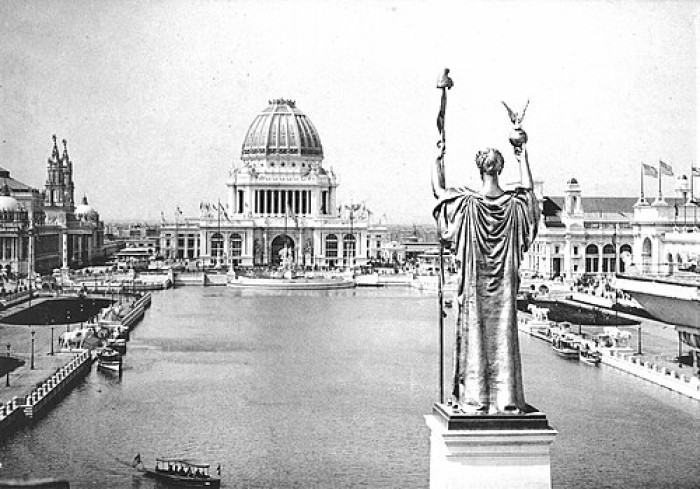
Chicago World's Fair, 1893
What emerged from Elias's work was a two-story house, built to accommodate his growing family. At the time of its completion in 1895, Elias would have lived in the home with his wife, Flora, and his three sons, Herbert, Raymond, and Roy. This corresponds with the 1900 census that lists the family of five as the occupants. Walt would not be born until 1901.
For the time period when the Disneys lived in Chicago, we do not have a large paper trail. We have the 1900 census mentioned previously, as well as a directory that lists Elias Disney at 2140 Tripp Avenue, before the house was renumbered to 2156 North Tripp Ave.
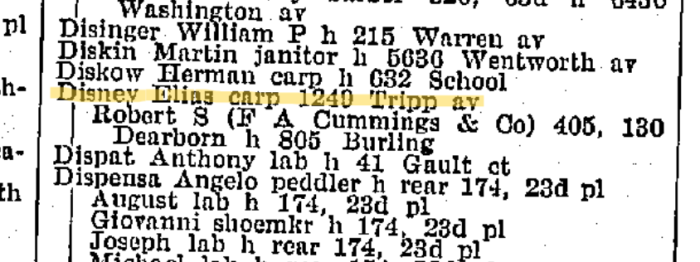
1900 Chicago Directory
A baby girl, named Ruth, was born into the Disney family in 1903. Three years later, in 1906, the family would move to Missouri, leaving the house that Elias built behind.
As for the new occupants, the 1910 census lists Rudolph Bleidl, his wife Matill, their daughter Hermine, and the rest of their extended family. As Chicago had renumbered their houses around this time, the census may not line up exactly with the current address, but the Bleidls are our best guess at who lived in the house at the time.
We do not have much information about the Bleidls; we can only assume that they moved out of the house by 1920, as a new family had moved in by then. The Bensons, which included Otto, his wife Minnie, and their children, Violet, Floyd, and Dorothy, are listed under the address of 2156 North Tripp Ave. Surprisingly, they may not have been the only family to live there, as two other families, the Olsons and the Olsens, are also listed under the 2156 address. It may be that more than one family was living in the house at the same time; however, we do not have sufficient information at this time to make a more educated guess.
Whatever the case may be about the occupants in 1920, in 1930, they seem to have moved out of the house. The Leibermanns, consisting of Gustav and his wife Jennie, lived in the house in 1930. They also seemed to have lived with another couple, George and Hazel Erikson, as they are also written under the 2156 address. Again, it's possible that the house was either used as apartments or the two couples lived in one unit.
The two couples would also have to have moved out by 1938, when our next piece from the timeline comes into play. In late July of 1938, Edward Manke Jr., who lived at 2156 North Tripp Avenue, drowned at the shores of Montrose Beach. He was only eleven years old.
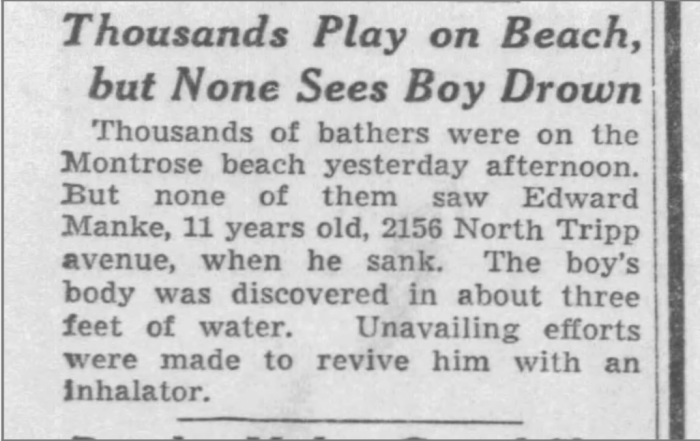
Chicago Tribune, Jul. 25, 1938
His family, the Mankes, lived at 2156 North Tripp Avenue at the time and was composed of Edward, his wife Lillian, a son named Ernest, and a daughter named Elaine. Ernest's wife, Nona, also lived with them.
We also have a few more documents from this period. Ernest Manke's draft registration card from 1940 stated his address as 2156 North Tripp Avenue and listed his wife, Nona, as the person who will always know his address.
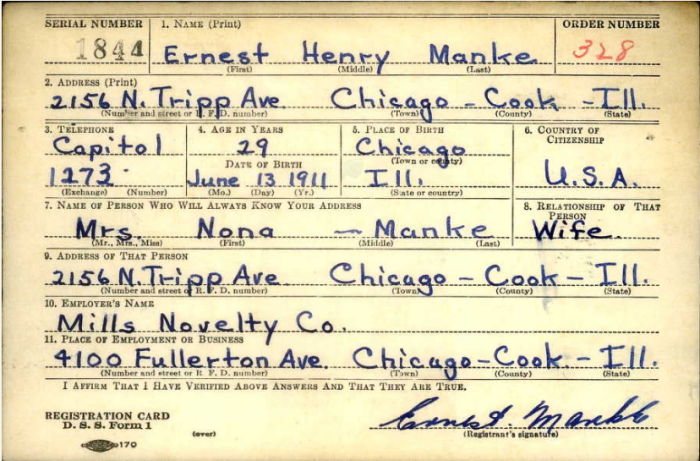
Ernest Manke's Draft Card, c. 1940
The other document we have is Elaine's file card from the US World War II Cadet Nursing Corps, dated 1944. It lists her name, her school, as well as the date of her admission to the Corps.
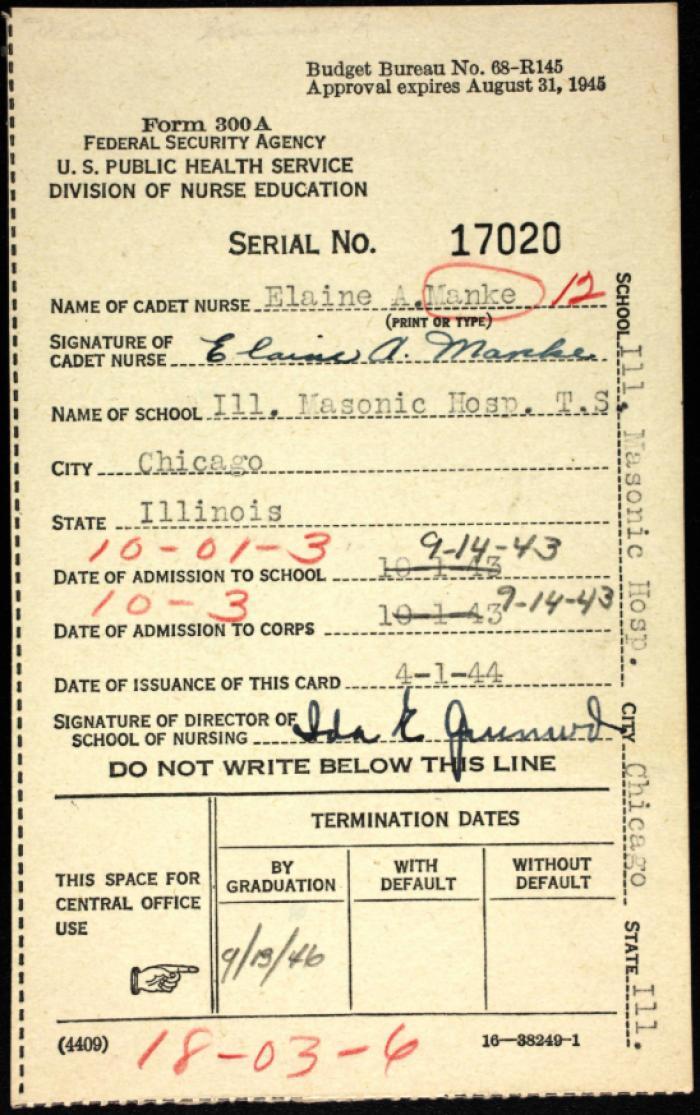
Elaine's File Card, c. 1944
The Mankes continued to live at 2156 North Tripp Avenue. However, by the time the 1950 census was taken, only Edward and Lillian lived in the home.
It is at this point in our timeline (see link below) that we lose track of the owners until 1991, when the house gained notoriety for being Walt Disney's birthplace. It was at this time that the Chicago Commission on Landmarks, a group responsible for recommending sites for legal protection as official landmarks, debated whether Walt Disney's childhood home should be designated as an official landmark. The owner at the time, June Saathof, stated that she would rather the house not be designated, because she felt that "it's my house, and it has my personality."
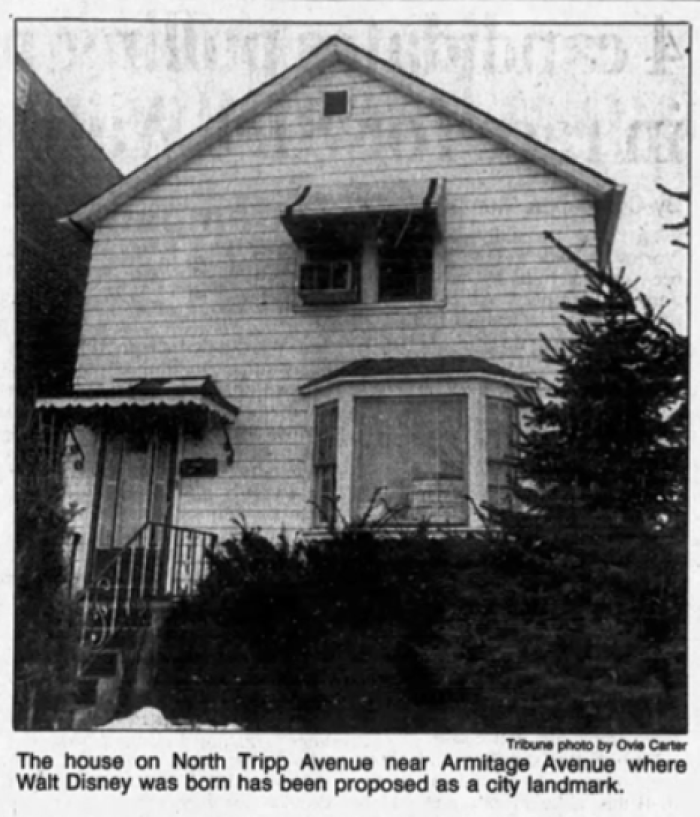
Chicago Tribune, Feb. 6, 1991
The discourse continued through the years as public hearings were held, and June Saathof once again expressed her concerns about it and the possible financial responsibility she would have if the house ever became a landmark.
The debates didn’t exactly stop, but rather ground to a halt. The question of Walt Disney's character and political leanings was raised during the hearing for the landmark, which ultimately helped kill the motion. What also helped was June Saathof's concern that if her house were designated a landmark, she would have a hard time selling it.
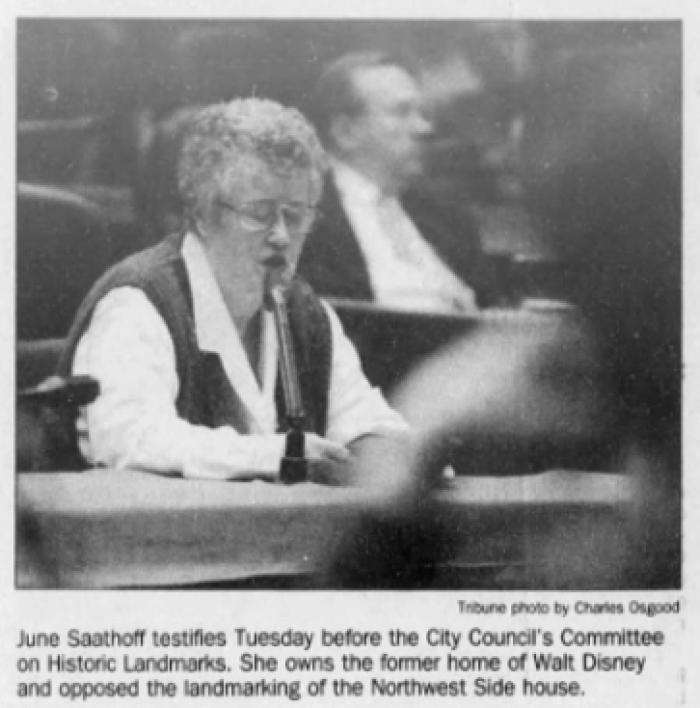
Chicago Tribune, Feb. 26, 1997
And so, the house was not declared a landmark. June Saathof most likely moved out of her house in the early 2000s, as the owners of the house, the Popovics, attempted to sell the house on eBay in 2006. They stated that they hoped to find on eBay someone who would be able to restore the house to the way it was when Walt Disney lived there. Unfortunately, the house would remain unsold for a number of years, until it was bought in 2013.

Chicago Tribune, Dec. 8, 2006
The new owners, Dina Brandon and Brent Young, bought the house with the intent to turn it into a museum. And while they did start out with financial troubles in the beginning, eventually they got started on renovations that aimed to restore the house to its former glory. It would take them a couple of years, and through many obstacles, but they found their way. In 2023, Walt Disney's Childhood Home finally opened its doors to the public.
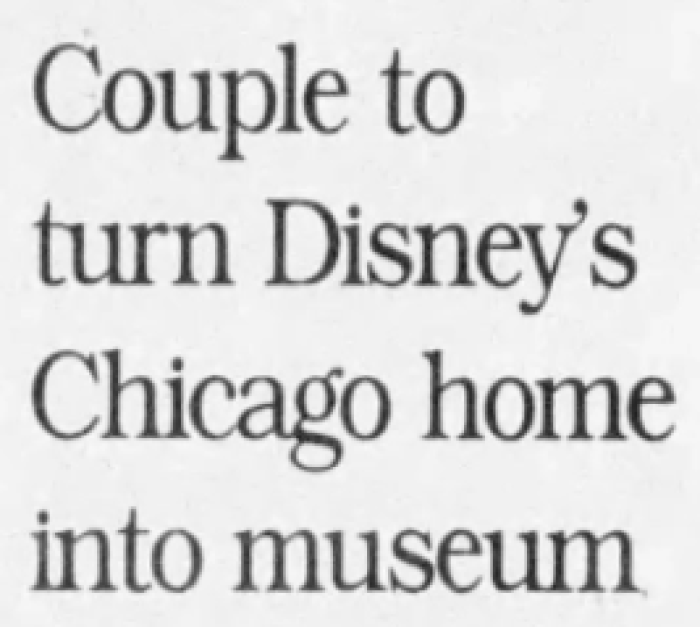
The Taylorville Daily Breeze Courier, Dec. 6, 2013
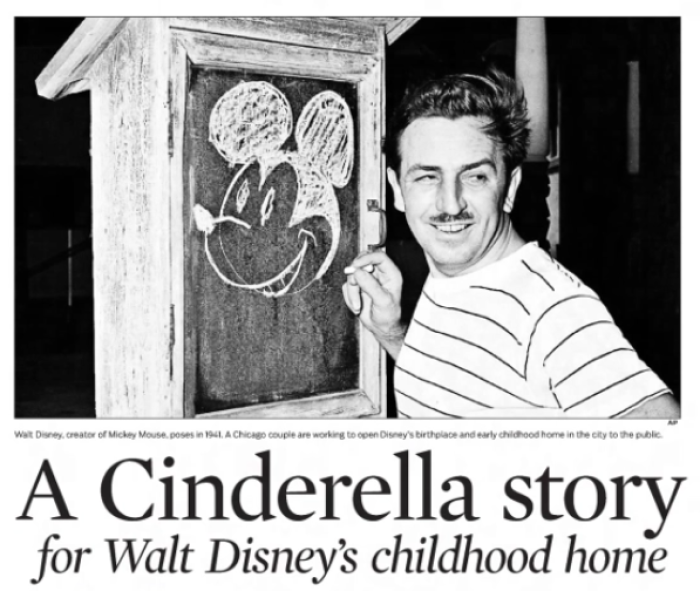
Chicago Tribune, Aug. 9, 2015
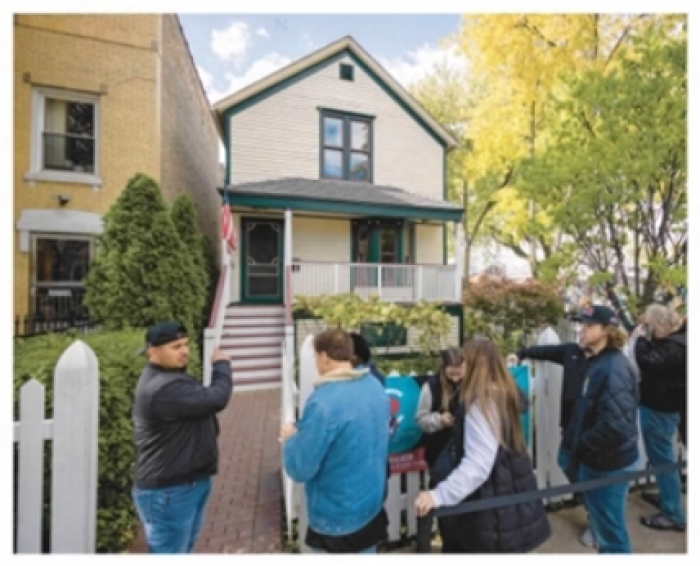
Chicago Tribune, Aug. 16, 2023
Currently, the home is still being operated as a tourist attraction that also aims to promote curiosity and innovative thinking in its visitors. If you are one of those curious people, then perhaps you may want to check out our 2156 North Tripp Avenue timeline, where you can view the history of Walt Disney's childhood home.
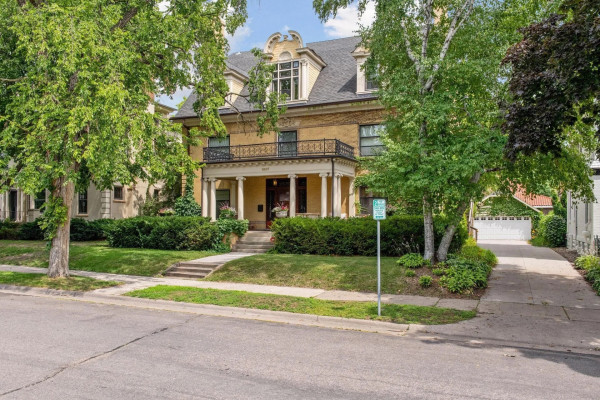
The Story of 1807 Dupont Avenue South: A Minneapolis Queen Anne With 120 Years of History
Step inside 1807 Dupont Avenue South, a historic Queen Anne home in Minneapolis. From three generations of the Jamieson family to a modern restoration, this house has seen it all.

Buy an Entire Abandoned Village in Spain for Under $75,000
Spain is one of the most beautiful countries in the world, treasured for its rich tradition, culture, and heritage.
What's the different between a deed and title?
Unlocking Real Estate Jargon: Difference Between a Title and a Deed. In the complex world of property ownership, do you know the distinction between these two crucial terms?
What's the history of: 94 1/2 East Avenue Wellsboro Pennsylvania
What's the story with that house?! The complete home history for 94 1/2 East Avenue Wellsboro Pennsylvania. A fixture in the Wellsboro community.
