Share what you know,
and discover more.
Share what you know,
and discover more.
Aug 02, 2022


McLeod Plantation
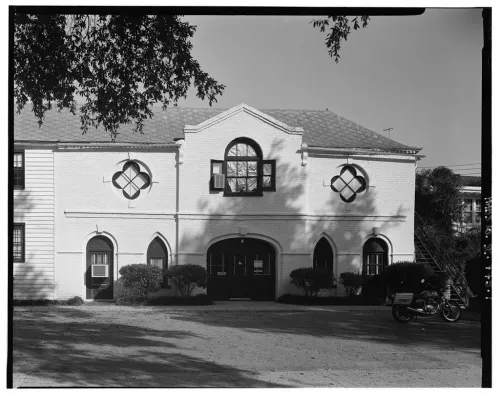
McLeod Plantation is a former slave plantation located on James Island, South Carolina, near the intersection of Folly and Maybank roads at Wappoo Creek, which flows into the Ashley River. The plantation is considered an important Gullah heritage site, preserved in recognition of its cultural and historical significance to African-American and European-American cultures. History The site was first recorded on maps from 1678 under the name "Morris." In 1780 in the American War of Independence, British General Sir Henry Clinton used the original house as his headquarters while planning the siege of Charleston. Many enslaved workers joined the British lines seeking freedom, and were evacuated from the city. The plantation house standing on the land today was constructed in about 1858 in the Georgian style. Also on the property are six remaining clapboard slave cabins, a detached kitchen, a dairy building, a pre-Civil War gin house for the long-staple cotton grown on the Sea Islands, a barn, and a carriage house. The plantation was occupied by Confederate forces during most of the Civil War, and the Big House served as a hospital. After the evacuation of Charleston in early 1865, the site was occupied by the 55th Massachusetts Volunteer Regiments, African American soldiers of the US Colored Troops. Later, the home was occupied as offices by the Freedmen's Bureau. At one point, newly freed enslaved people camped out on the plantation's lands. In 1926, owners renovated the house, changing what was designated as the front and rear, and altering the front facade. The home was occupied by the McLeod family until 1990. A share was given to the Historic Charleston Foundation, which proceeded to consolidate shareholders. In 1993, ten acres were designated for the growing of sweetgrass to help ensure a supply of the basic component used in crafting sweetgrass baskets, a product of the creole Gullah culture of African Americans. In 2004 the plantation was sold to the American College of the Building Arts (ACBA). Unable to support both the development of their school and the plantation, ACBA returned it to Historic Charleston in 2008. McLeod Plantation Historic Site In 2011, Historic Charleston Foundation sold McLeod Plantation to the Charleston County Park and Recreation Commission, thereby ensuring the buildings would be restored and protected under public ownership. The McLeod Plantation Historic Site opened to the public on April 25, 2015. The site is designated as part of the federally recognized Gullah/Geechee Cultural Heritage Corridor in South Carolina. The corridor stretches along the coast from Wilmington, North Carolina, to Jacksonville, Florida, encompassing the Lowcountry and Sea Islands, with South Carolina representing most of the area. Enslaved people who survived the Middle Passage, were imported here mostly from west and central Africa. They were forced to labor on rice, indigo and cotton plantations such as McLeod. From various ethnic and cultural groups, these men, women, and children developed the creole Gullah/Geechee culture and language, which has many African retentions. It was also named one of the African American Historic Places in South Carolina.
McLeod Plantation
McLeod Plantation is a former slave plantation located on James Island, South Carolina, near the intersection of Folly and Maybank roads at Wappoo Creek, which flows into the Ashley River. The plantation is considered an important Gullah heritage site, preserved in recognition of its cultural and historical significance to African-American and European-American cultures. History The site was first recorded on maps from 1678 under the name "Morris." In 1780 in the American War of Independence, British General Sir Henry Clinton used the original house as his headquarters while planning the siege of Charleston. Many enslaved workers joined the British lines seeking freedom, and were evacuated from the city. The plantation house standing on the land today was constructed in about 1858 in the Georgian style. Also on the property are six remaining clapboard slave cabins, a detached kitchen, a dairy building, a pre-Civil War gin house for the long-staple cotton grown on the Sea Islands, a barn, and a carriage house. The plantation was occupied by Confederate forces during most of the Civil War, and the Big House served as a hospital. After the evacuation of Charleston in early 1865, the site was occupied by the 55th Massachusetts Volunteer Regiments, African American soldiers of the US Colored Troops. Later, the home was occupied as offices by the Freedmen's Bureau. At one point, newly freed enslaved people camped out on the plantation's lands. In 1926, owners renovated the house, changing what was designated as the front and rear, and altering the front facade. The home was occupied by the McLeod family until 1990. A share was given to the Historic Charleston Foundation, which proceeded to consolidate shareholders. In 1993, ten acres were designated for the growing of sweetgrass to help ensure a supply of the basic component used in crafting sweetgrass baskets, a product of the creole Gullah culture of African Americans. In 2004 the plantation was sold to the American College of the Building Arts (ACBA). Unable to support both the development of their school and the plantation, ACBA returned it to Historic Charleston in 2008. McLeod Plantation Historic Site In 2011, Historic Charleston Foundation sold McLeod Plantation to the Charleston County Park and Recreation Commission, thereby ensuring the buildings would be restored and protected under public ownership. The McLeod Plantation Historic Site opened to the public on April 25, 2015. The site is designated as part of the federally recognized Gullah/Geechee Cultural Heritage Corridor in South Carolina. The corridor stretches along the coast from Wilmington, North Carolina, to Jacksonville, Florida, encompassing the Lowcountry and Sea Islands, with South Carolina representing most of the area. Enslaved people who survived the Middle Passage, were imported here mostly from west and central Africa. They were forced to labor on rice, indigo and cotton plantations such as McLeod. From various ethnic and cultural groups, these men, women, and children developed the creole Gullah/Geechee culture and language, which has many African retentions. It was also named one of the African American Historic Places in South Carolina.
Aug 02, 2022

Posted Date
Oct 13, 2022
Historical Record Date
Aug 02, 2022
Source Name
Wikipedia
Source Website
Aug 13, 1974


Aug 13, 1974

National Register of Historic Places - McLeod Plantation
Statement of Significance: Constructed in 1858 by William McLeod, McLeod Plantation has remained in the family since it was built and is still a functioning agricultural enterprise. The oak-lined drive to the house recalls the antebellum period, the vestiges of which are fast disappearing on James Island, owing to commercial and suburban development. The plantation still retains many aspects of nineteenth-century rural life including slave cabins, gardens, interesting landscaping, fields, and evidence of Union occupation during the War Between the States; there is also an Indian Village site on the grounds. AGRICULTURE - LANDSCAPE ARCHITECTURE: McLeod Plantation still displays many features associated with antebellum cotton plantations; unlike most of those remaining, however, this one is still a working plantation. There are five clapboard slave quarters lining the drive to the house, which originally ran to a landing on Stone Creek where supplies were unloaded, and produce was shipped to market. Today, however, the drive is cut off by Country Club Road, and the creek is part of the Intracoastal Waterway. Originally fronting to the south with a one-story shed-roofed porch (now the rear), a two-story Roman Doric portico was added in 1926 to what had been the rear of the house. In front of the original entrance is a garden of indigenous flowering shrubs, which are original to the house. The newer entrance is surrounded with shrubs and small trees, including palmettos. BLACK HISTORY - ARCHITECTURE: Five clapboard slave cabins with corbeled brick gable-end chimneys remain on the plantation drive in excellent condition. An additional cabin, containing two rooms with separate entrances, is rectangular in shape with a central chimney serving both rooms; one room was used as a kitchen, the other as a bedroom. The cabins are currently occupied by descendants of the former slaves. MILITARY: The house was apparently one of several Confederate unit headquarters during the War Between the States, which statement may be verified by the handwritten sign on an upstairs wall which reads "adjutant's room 2d." A hand points to the southwest room of the second floor, believed to have been in use as a hospital. ARCHEOLOGY: There is a small Indian site of possible archeological importance on the plantation property near the intersection of the drive and Country Club Road.
National Register of Historic Places - McLeod Plantation
Statement of Significance: Constructed in 1858 by William McLeod, McLeod Plantation has remained in the family since it was built and is still a functioning agricultural enterprise. The oak-lined drive to the house recalls the antebellum period, the vestiges of which are fast disappearing on James Island, owing to commercial and suburban development. The plantation still retains many aspects of nineteenth-century rural life including slave cabins, gardens, interesting landscaping, fields, and evidence of Union occupation during the War Between the States; there is also an Indian Village site on the grounds. AGRICULTURE - LANDSCAPE ARCHITECTURE: McLeod Plantation still displays many features associated with antebellum cotton plantations; unlike most of those remaining, however, this one is still a working plantation. There are five clapboard slave quarters lining the drive to the house, which originally ran to a landing on Stone Creek where supplies were unloaded, and produce was shipped to market. Today, however, the drive is cut off by Country Club Road, and the creek is part of the Intracoastal Waterway. Originally fronting to the south with a one-story shed-roofed porch (now the rear), a two-story Roman Doric portico was added in 1926 to what had been the rear of the house. In front of the original entrance is a garden of indigenous flowering shrubs, which are original to the house. The newer entrance is surrounded with shrubs and small trees, including palmettos. BLACK HISTORY - ARCHITECTURE: Five clapboard slave cabins with corbeled brick gable-end chimneys remain on the plantation drive in excellent condition. An additional cabin, containing two rooms with separate entrances, is rectangular in shape with a central chimney serving both rooms; one room was used as a kitchen, the other as a bedroom. The cabins are currently occupied by descendants of the former slaves. MILITARY: The house was apparently one of several Confederate unit headquarters during the War Between the States, which statement may be verified by the handwritten sign on an upstairs wall which reads "adjutant's room 2d." A hand points to the southwest room of the second floor, believed to have been in use as a hospital. ARCHEOLOGY: There is a small Indian site of possible archeological importance on the plantation property near the intersection of the drive and Country Club Road.


Posted Date
Oct 13, 2022
Historical Record Date
Aug 13, 1974
Source Name
National Register of Historic Places