


Share what you know,
and discover more.
Share what you know,
and discover more.
Apr 15, 1970


National Register of Historic Places - The Heyward-Washington House
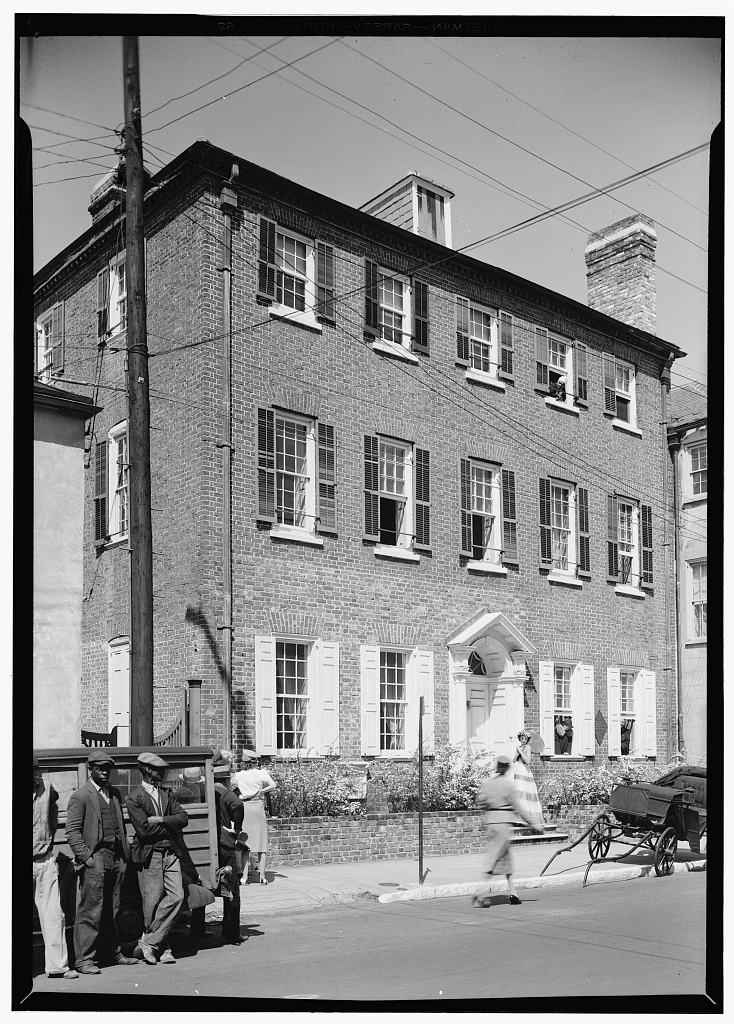
Statement of Significant: The Heyward-Washington House is a very fine three-story brick Charleston "double house" which commemorates the residence of Thomas Heyward, Jr. (1746-1809), one of the signers of the Declaration of Independence. Built 1770-71 and acquired by Thomas Heyward, Jr., from his father in 1777, the house was implicitly deemed outstandingly worthy when chosen in 1791 to shelter President Washington when he visited the city on his Southern tour that year. Since then, the Heyward House has been called The Heyward Washington House. BRIEF BIOGRAPHICAL SKETCH OF THOMAS HEYWARD, JR. (1746-1809) signer of The Declaration of Independence Thomas Heyward, Jr., was born July 28, 1746, at Old House Plantation, Euhaw Creek, Jasper County, South Carolina, the eldest son of one of the wealthiest rice planters of South Carolina. He studied law at Middle Temple, London, beginning in 1765, and was admitted to the South Carolina Bar in 1771. The following year he was elected to the Commons House of the South Carolina Assembly. In 1773 he was married to Elizabeth Mathews and after being widowed, married Susanna Savage in 1786. Heyward was a delegate to the provincial convention meeting in Charleston in 1774, and to the provincial congresses of 1775 and 1776, serving also on the South Carolina Committee of Safety, and helping to prepare a constitution for the state in 1776. Heyward was one of the five delegates from South Carolina sent to the Second Continental Congress in 1776, signed the Declaration of Independence, and served in Congress until the end of 1778 when he returned to his home state to become a circuit judge. He was a captain of a battalion of artillery of the Charleston militia, participated in Moultrie's defeat of the British of February 4, 1779 on Port Royal Island where he was wounded. Having taken part in the defense of Charleston, he was paroled as a prisoner of war when the city fell on May 12, 1780. His parole was soon recalled however and Heyward was held prisoner at the Castillo de San Marcos until he was exchanged in July 1781. From 1782 to 1784, Heyward represented Charleston in the state legislature, and resumed his duties as circuit judge, retiring from public life in 1789. Thomas Heyward, Jr. died March 6, 1809, and is buried in the family cemetery, adjacent to the Old House Plantation at Euhaws.
National Register of Historic Places - The Heyward-Washington House
Statement of Significant: The Heyward-Washington House is a very fine three-story brick Charleston "double house" which commemorates the residence of Thomas Heyward, Jr. (1746-1809), one of the signers of the Declaration of Independence. Built 1770-71 and acquired by Thomas Heyward, Jr., from his father in 1777, the house was implicitly deemed outstandingly worthy when chosen in 1791 to shelter President Washington when he visited the city on his Southern tour that year. Since then, the Heyward House has been called The Heyward Washington House. BRIEF BIOGRAPHICAL SKETCH OF THOMAS HEYWARD, JR. (1746-1809) signer of The Declaration of Independence Thomas Heyward, Jr., was born July 28, 1746, at Old House Plantation, Euhaw Creek, Jasper County, South Carolina, the eldest son of one of the wealthiest rice planters of South Carolina. He studied law at Middle Temple, London, beginning in 1765, and was admitted to the South Carolina Bar in 1771. The following year he was elected to the Commons House of the South Carolina Assembly. In 1773 he was married to Elizabeth Mathews and after being widowed, married Susanna Savage in 1786. Heyward was a delegate to the provincial convention meeting in Charleston in 1774, and to the provincial congresses of 1775 and 1776, serving also on the South Carolina Committee of Safety, and helping to prepare a constitution for the state in 1776. Heyward was one of the five delegates from South Carolina sent to the Second Continental Congress in 1776, signed the Declaration of Independence, and served in Congress until the end of 1778 when he returned to his home state to become a circuit judge. He was a captain of a battalion of artillery of the Charleston militia, participated in Moultrie's defeat of the British of February 4, 1779 on Port Royal Island where he was wounded. Having taken part in the defense of Charleston, he was paroled as a prisoner of war when the city fell on May 12, 1780. His parole was soon recalled however and Heyward was held prisoner at the Castillo de San Marcos until he was exchanged in July 1781. From 1782 to 1784, Heyward represented Charleston in the state legislature, and resumed his duties as circuit judge, retiring from public life in 1789. Thomas Heyward, Jr. died March 6, 1809, and is buried in the family cemetery, adjacent to the Old House Plantation at Euhaws.
Apr 15, 1970


Posted Date
Jun 09, 2023
Historical Record Date
Apr 15, 1970
Source Name
National Register of Historic Places
Source Website



Posted Date
Sep 27, 2021
Source Name
Library of Congress
Source Website


Posted Date
Sep 27, 2021
Source Name
Library of Congress


