The Haunted Hallways of the Winchester Mystery House: Who dared to stay and why?
Why did Sarah Winchester build the house like she did? And what happened to the home when she died? Uncover the story behind the Winchester Mystery House.
August 15, 2025
Picture it. San Jose, 1885. A rich, wealthy widow arrives in California, looking to get a fresh start. She had come to California from New Haven, Connecticut on the recommendation of her doctor, who suggested that the warm climate of California would be good for her and her arthritis. Her name was Sarah Winchester, widow of William Wirt Winchester, and, at the time of her husband's death, the heiress to all of his wealth, including the Winchester Repeating Arms company.
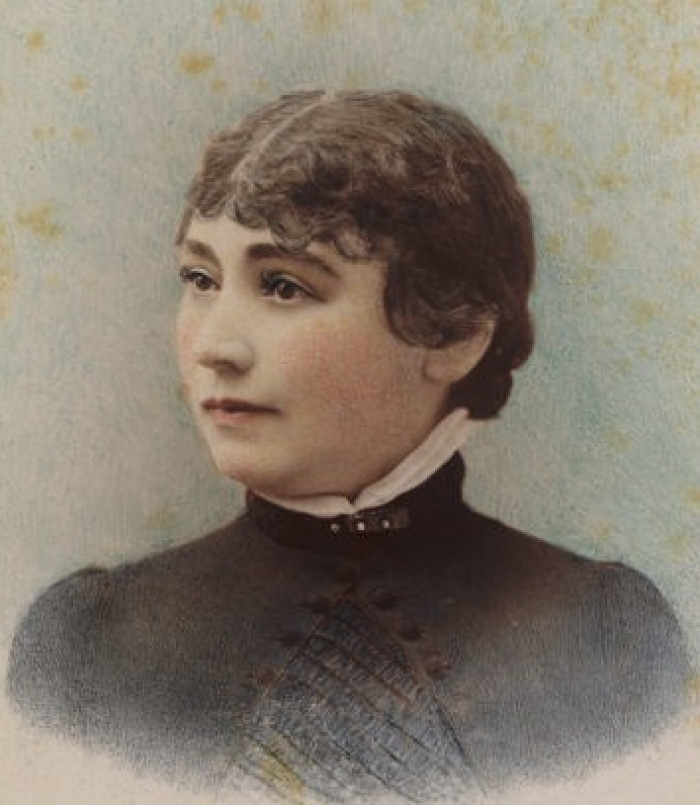
Sarah Pardee Winchester, c.1865
And so she came to San Jose and began the search for a house. She found what she was looking for in a modest farmhouse, built in 1884 in the Queen Anne style, consisting of eight rooms and forty-five acres. It was located just outside the city, in the Santa Clara Valley. She named the house Llanada Villa after Llanada Alavesa, a region in Spain, and there the house sat, on a street named Santa Clara-Los Gatos Road (the road would not be renamed South Winchester Boulevard until long after her death).
As soon as Sarah Winchester acquired the house, she started to add additions and adjustments to the house. Sarah designed the rooms herself, with advice from her carpenters, and some say even built at the demands of the ghosts that she believed haunted her. Soon she would be adding on to the house in every way, shape, and form. She incorporated numerous styles such as Victorian, Gothic, and Romanesque features. She added multiple floors to the house and included a seven-story tower. When she changed her mind about a piece of construction, she would wall it off and leave doors and windows leading to nowhere.
Another feature of the home includes the “easy riders” stairs that were shorter than the average stair, which would allow the arthritis-ridden Mrs. Winchester to ascend to her rooms with ease. She was also very fond of stained-glass windows and had many installed in her house.
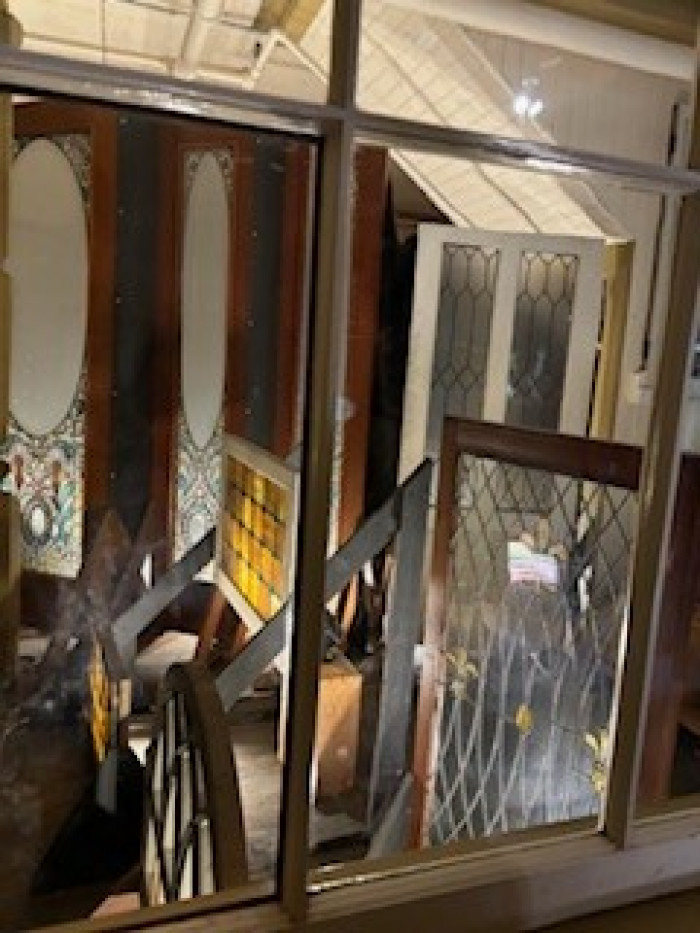
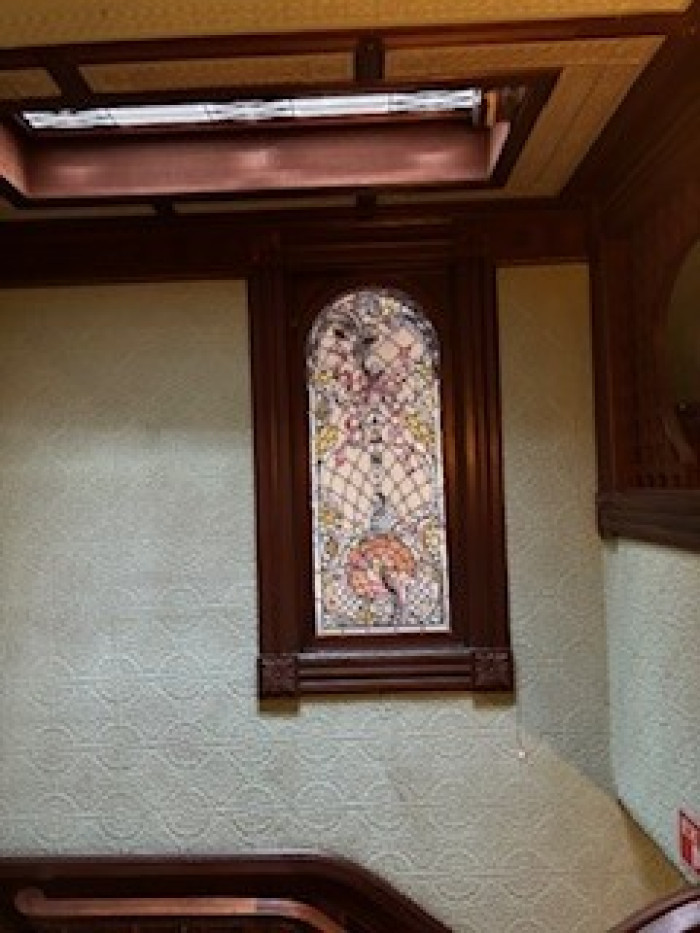
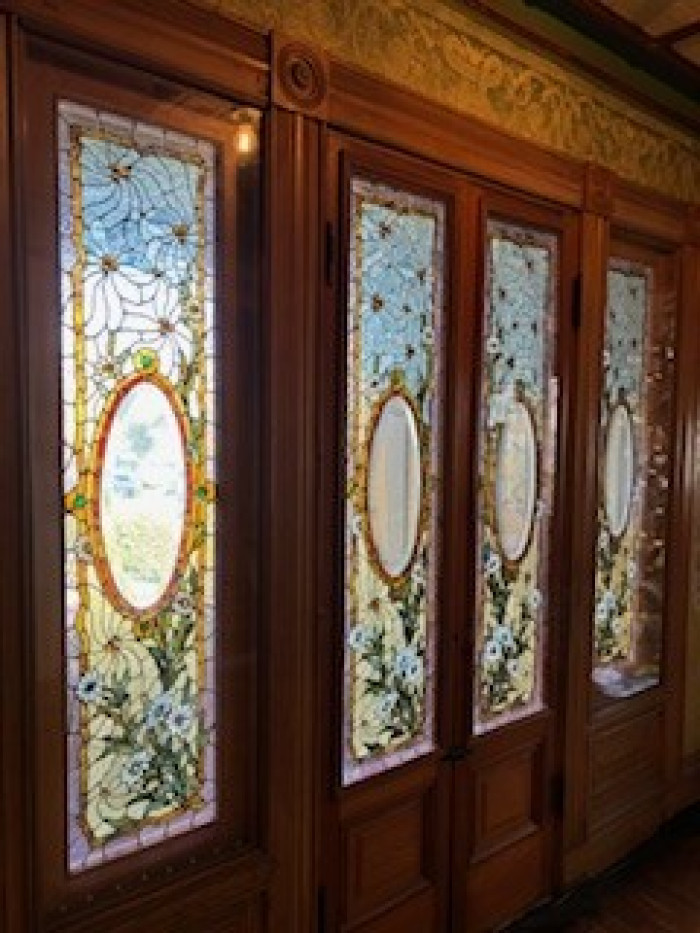
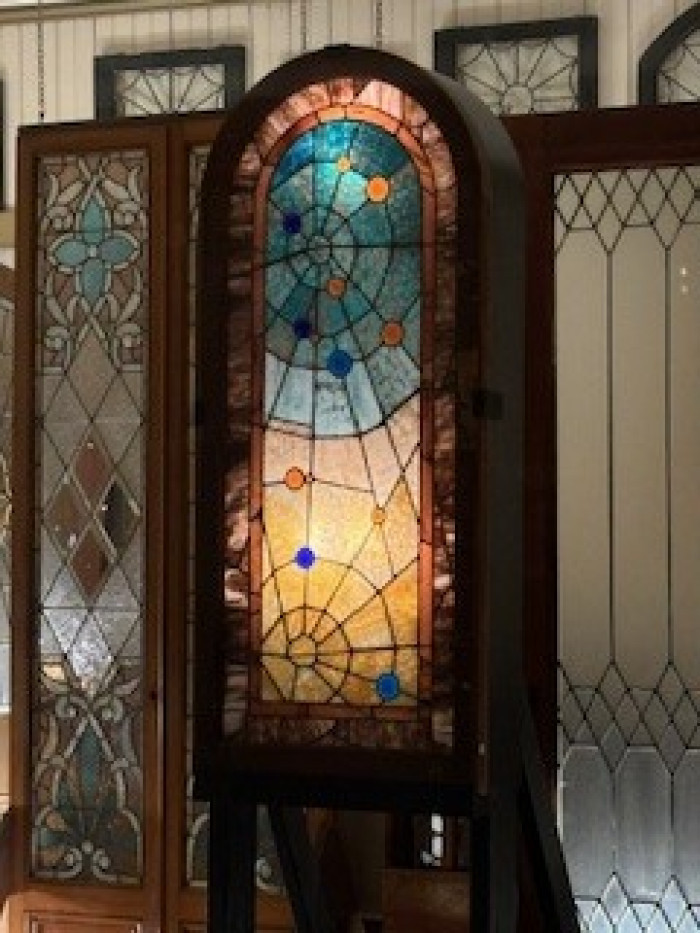
The construction was not halted for even a second at the house, as Mrs. Winchester believed that the sound of construction would lure the ghosts of people killed by Winchester guns away from her. The house grew and grew, staircases wound around the house, and windows opened into walls.
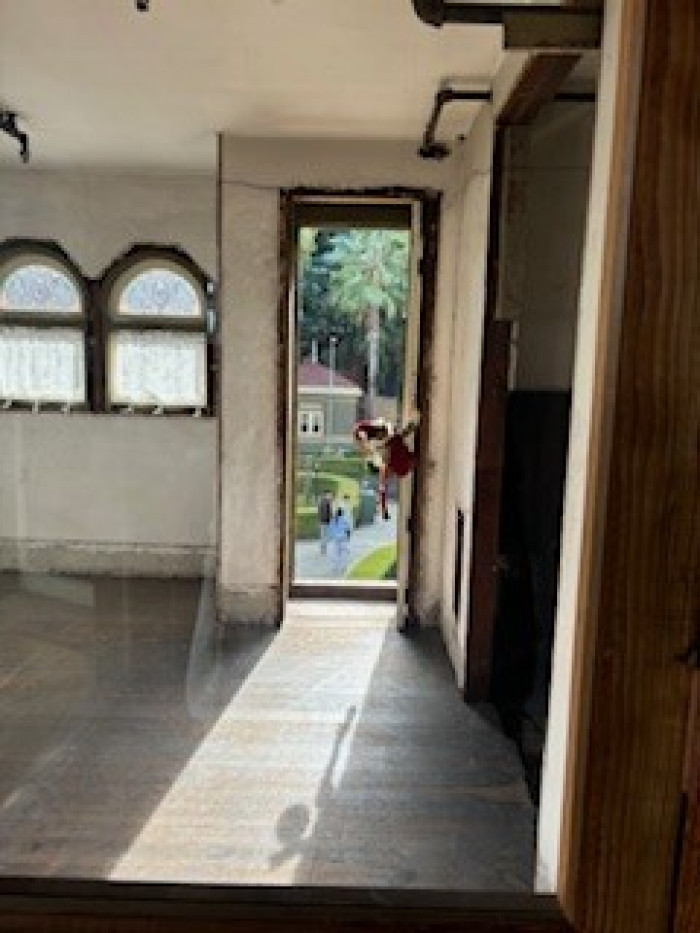
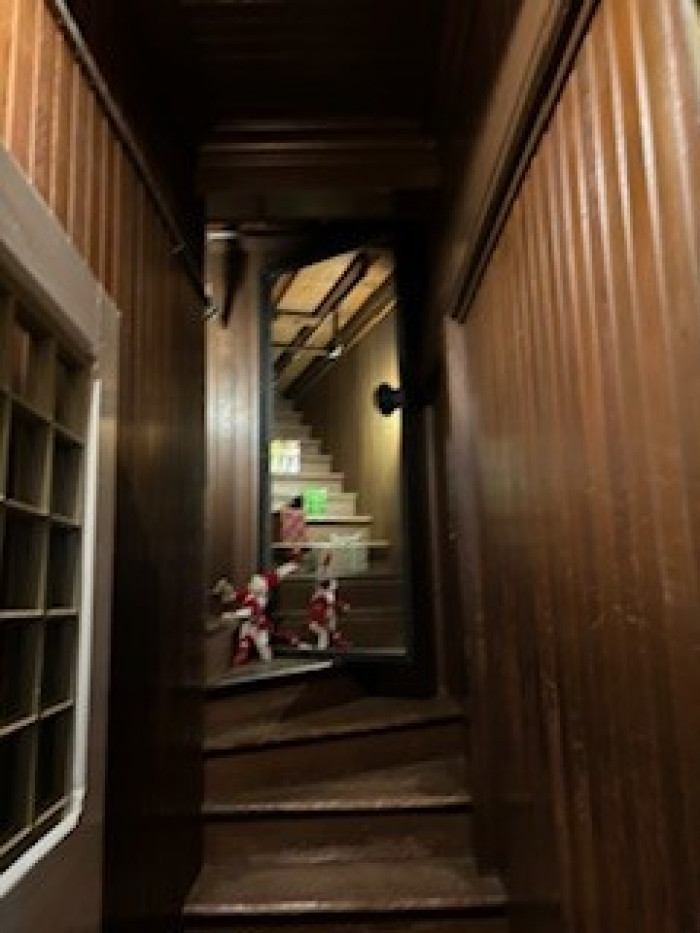
Mrs. Winchester was a very private person, possibly explaining why there was very little written about her life in the newspapers, or why there are no census records for when she occupied the house.
Her quiet solitude changed on the morning of April 18th, 1906, when a major earthquake rumbled its way towards Mrs. Winchester and her house. The house survived, and so did Mrs. Winchester, though for a while it seemed that the newspapers believed that she suffered from neuritis — an inflammation of the nerves causing pain and weakness —because of the earthquake. There were, however, other casualties. The tower was destroyed, as were the third and fourth story additions. This seemed to limit Mrs. Winchester because after the earthquake, very little was done to add to the house.
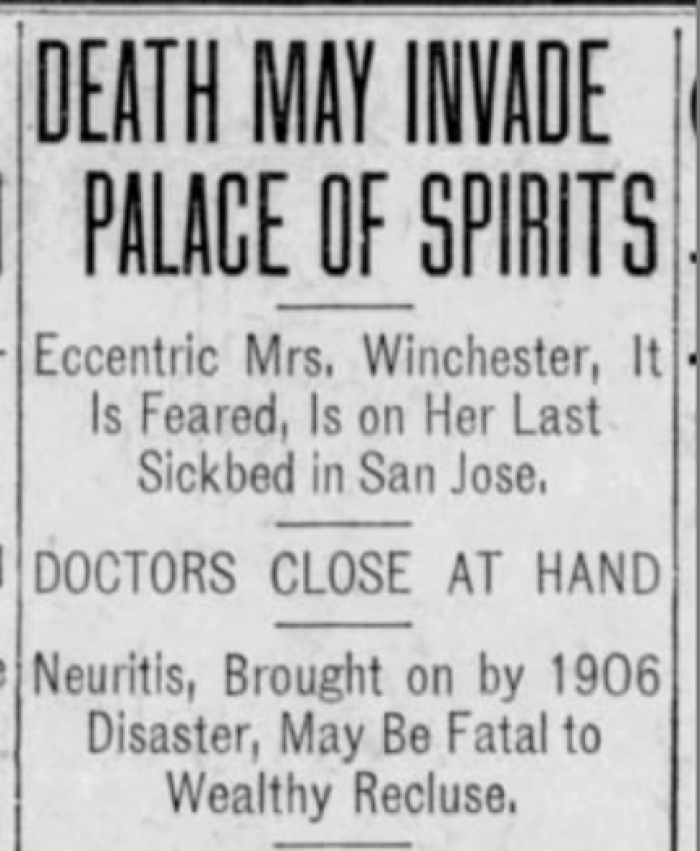
The San Francisco Examiner, Jun. 10, 1911
From our timeline, we do have some articles from the time between the earthquake and her death in 1922. An article from the San Francisco Chronicle, dated October 16, 1907, reported that Mrs. Winchester was legally summoned in a lawsuit seeking to take part of her land for public use through eminent domain. Mrs. Winchester, who valued her privacy, promptly avoided any and all who tried to give her the papers. Failure was admitted by the courts and the papers were mailed to her instead.
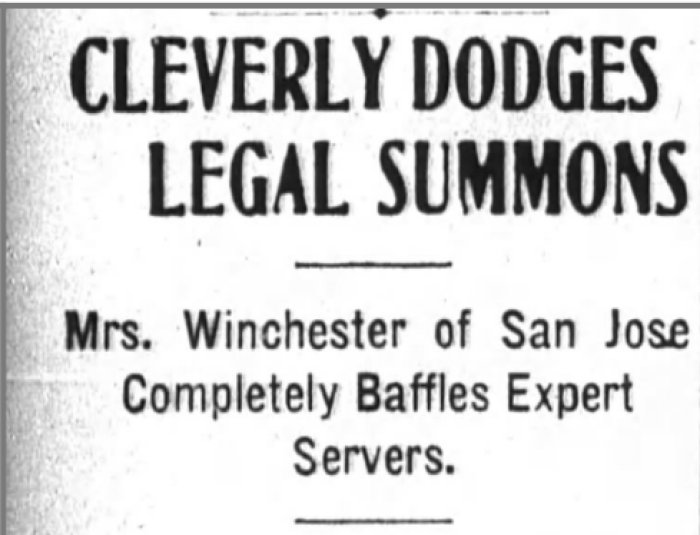
San Francisco Chronicle, Oct. 16, 1907
In 1909, Sarah Winchester entered the public eye willingly, as she sued contractor E.W. McClellan for securing 58 acres of land near Burlingame that McClellan and others had held. From the article, Mrs. Winchester seemed to have been angling to construct another building and hired McClellan to construct it, but seemed to have lost interest in it.
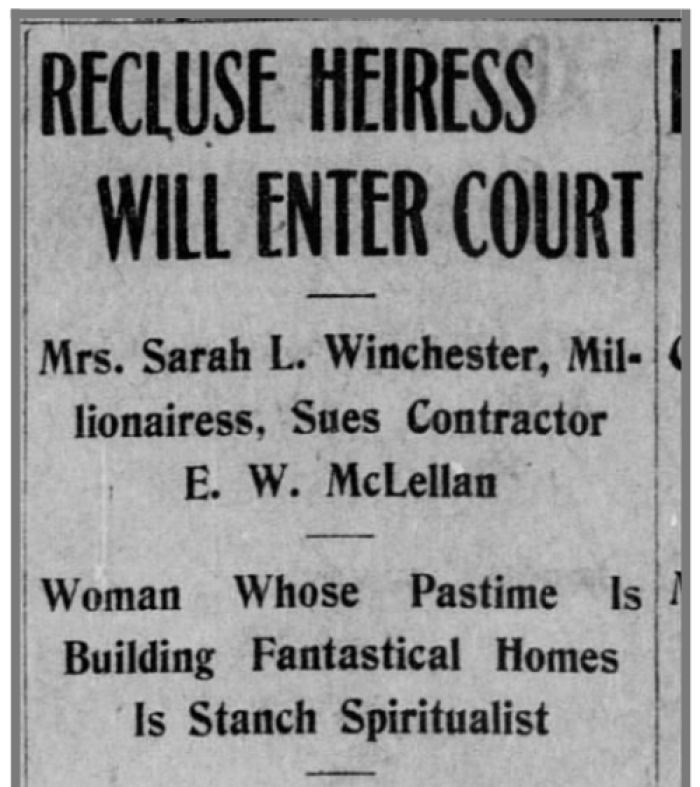
The San Francisco Call and Post, Jan. 10, 1909
And when Mrs. Winchester died in 1922, what did happen to that enormous and confusing house? Firstly, she willed most of her wealth to the General Hospital Society of New Haven, Conn. Her niece Daisy Mariott, who lived for some time with her aunt, was bequeathed the house and the numerous pieces of furniture as well. She did not keep the house or much of the furniture, having sold them almost as soon as she was given them.
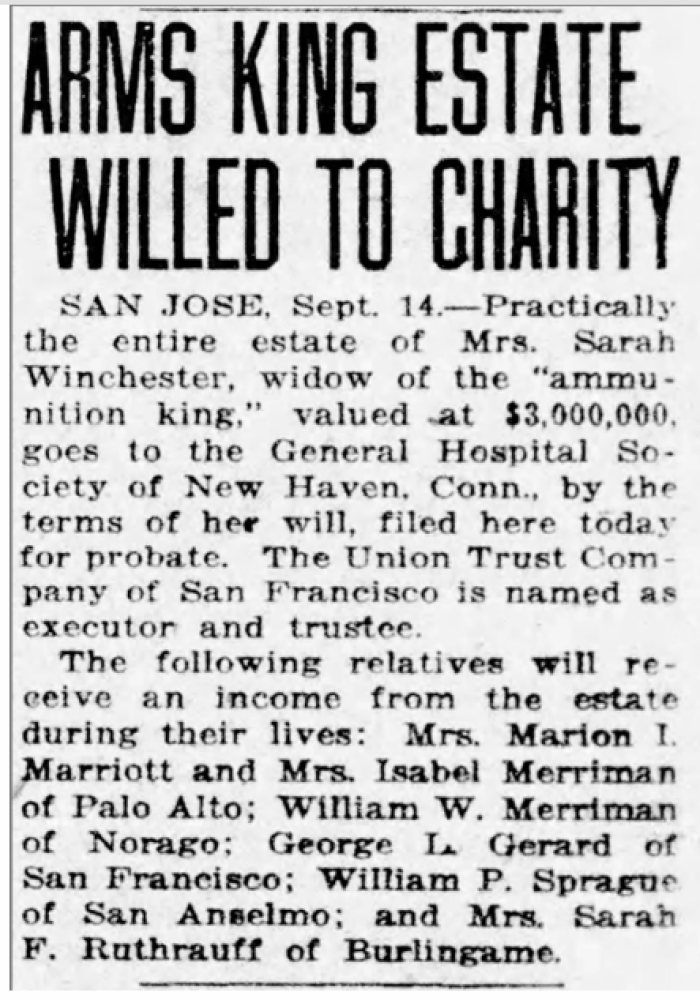
San Francisco Bulletin, Sep. 14, 1922
The new occupants who lived in the Winchester Mystery Home were John and Mayme Brown, entrepreneurs looking for their next project. Mrs. Winchester's solitude, combined with the rumors about her affiliations with ghosts, created a rumor mill dedicated to the supposed hauntings in the house. With rumors abounding, the Browns thought that this could be their chance. And so, they started their business, giving tours to the curious and the inquisitive.
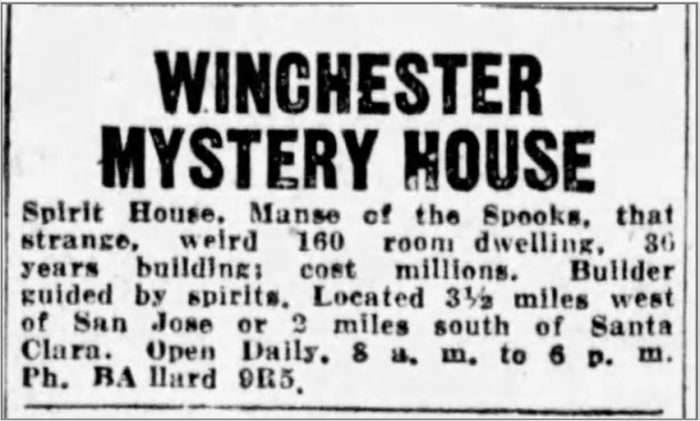
The San Francisco Examiner, Aug. 4, 1929
On they went, giving tours about the haunted woman who never stopped building. Census records from 1930 and 1940 have John and Mayme Brown living in the house with their children, and the few other records we have describe what they could have been doing to the house during that time. Considering that they ran a touring business, is seems likely that was the limit of their activity with the house.
However, in September of 1944, a window and twelve crystal chandeliers were stolen from the house. The window was estimated to be worth $1,000 (the equivalent of $18,179.40 as of March 2025), and there is no listed worth of the chandeliers, which had been listed by the Brown's as collector's items.
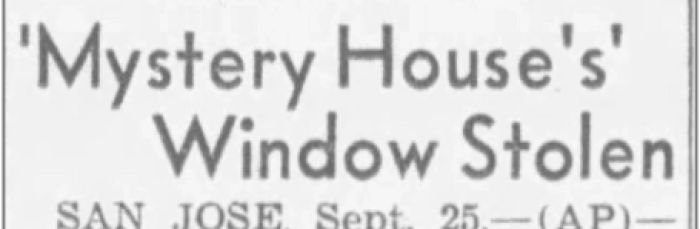
The San Francisco Examiner, Sept. 26, 1944
In 1950, Mayme Brown, now aged 75, still occupied the house and was presumably still running the house as a tourist destination.
This year also marks when there was an attempt at blueprinting the entire house, marking every single staircase, window, and room. It was not a simple task and lasted four months, and cost $5,000. In addition to the blueprints, sprinklers needed to be added in order to be up to code, costing the owners an additional $45,000.

The San Francisco Examiner, Jun. 25, 1950
In the year after the house was blueprinted, Mayme Brown died at age 76, leaving the house vacant and open for other investments.
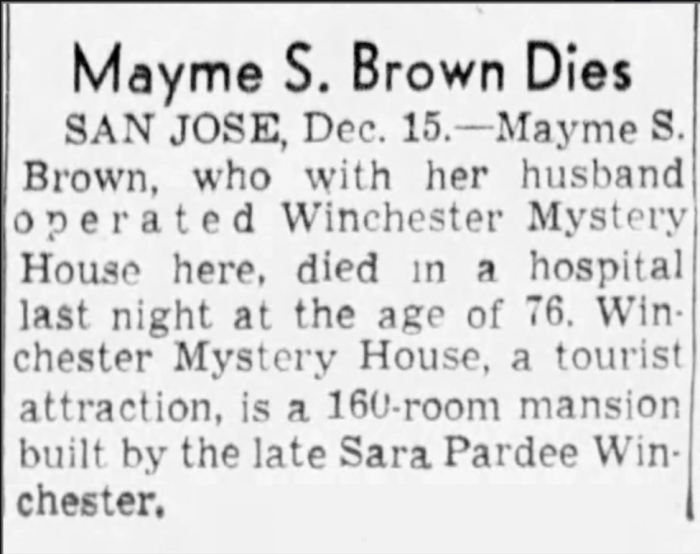
The San Francisco Examiner, Dec. 16, 1951
Our next stop in our timeline is an article from 1976, 24 years after Mayme Brown dies and after the house is officially named the Winchester Mystery House in 1963. It describes Sarah Winchester's life and her relationship with ghosts. This article was also written at the end of a three-year-long renovation, where furniture was sourced, color schemes matched, and the rooms restored to their original appearance. Visitors would have also been able to see the newly refurbished gardens, the greenhouse, and the gardener's shed.
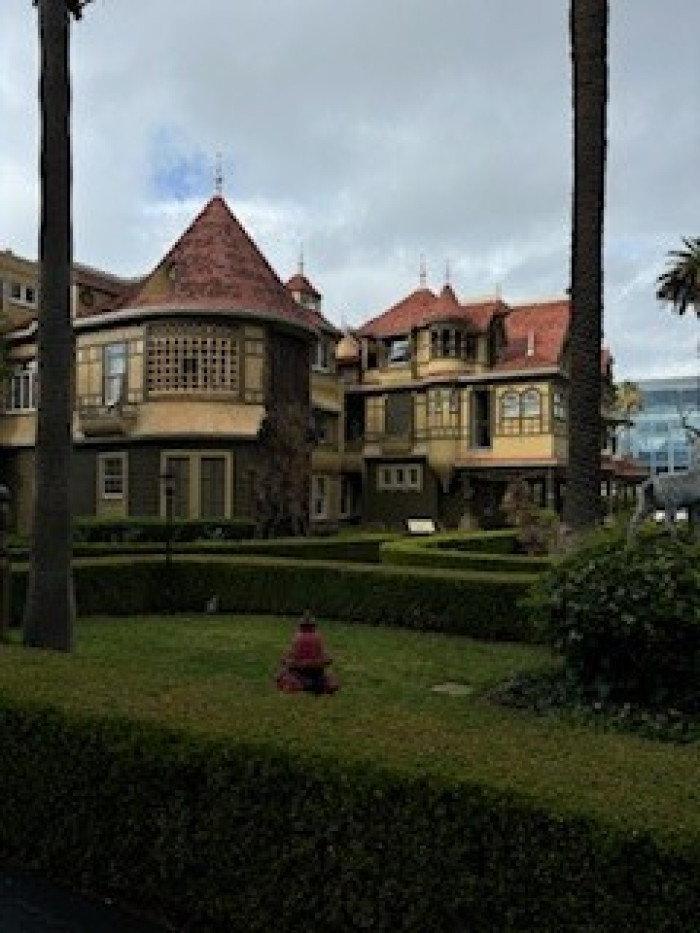
News about the house for the next 40 years is slim, as the house continued to be a popular tourist destination. In 2017, however, a new movie about the house began filming. Helen Mirren stars as Sarah Winchester, giving her own interpretation of Sarah Winchester and her relationship with the house. An article offering a glimpse into what it was like filming in a 160-room building — and what it was like for Helen Mirren to step into the shoes of Sarah Winchester — has been inserted into the home’s timeline (link below).

'Winchester' Movie Poster (2018)
As of today, the house still stands, an amalgamation of rooms that continues to fascinate and charm visitors. If you would like additional information about the documents mentioned here, please see our 525 South Winchester Blvd timeline.
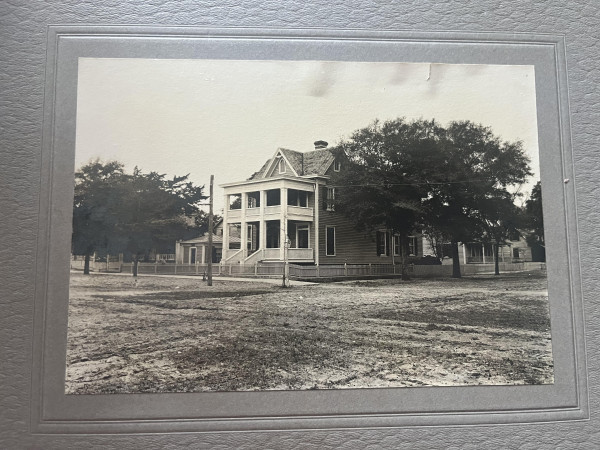
Help Us Solve the Mystery: Can You Identify This Historic Home in St. Mary’s County, Maryland?
This mysterious St. Mary’s County home may be gone—but its story isn’t. Help us uncover its location, history, and what once stood there.
Racial covenants: Revealing the impact of racial covenants on your home's history
Tracing the lasting impact of racial covenants on communities and homes.
What's the different between a deed and title?
Unlocking Real Estate Jargon: Difference Between a Title and a Deed. In the complex world of property ownership, do you know the distinction between these two crucial terms?
How Renovating Historic Properties Benefits You
Historical properties are society’s tangible assets, which hold significant cultural and economic benefits that need to be preserved for future generations.
