The Marrian Moyer House: A Monument to Past Lives and Architectural Creativity
Join us for a tour of our Marrian Moyer House, a place where the past is still visible in the stained-glass windows and the exquisite woodwork. Learn about the occupants of this home and how they lived in this grand example of early 20th century architecture.
August 22, 2025
In the Lowry Hill neighborhood of Minneapolis, Minnesota, stands a well-kept time machine of a home. This house at 1819 Emerson Ave S contains a multitude of architectural features, as well as a long history dating back to the early 20th century.
But before we get into the specifics of the house's history, let's first take a gander at the architectural novelties that this home offers.
Built in 1905, this spacious 4,444 sq. ft. building has five bedrooms and five bathrooms spaced out over three floors. And don't worry about leaving your car outside in that Minneapolis snow, because with a two-car garage, you can ensure that snow won't be able to do so much as glance in the direction of your vehicle. Inside, the home contains details such as stained-glass windows, high ceilings, and beautiful woodwork that are sure to impress your family and friends.
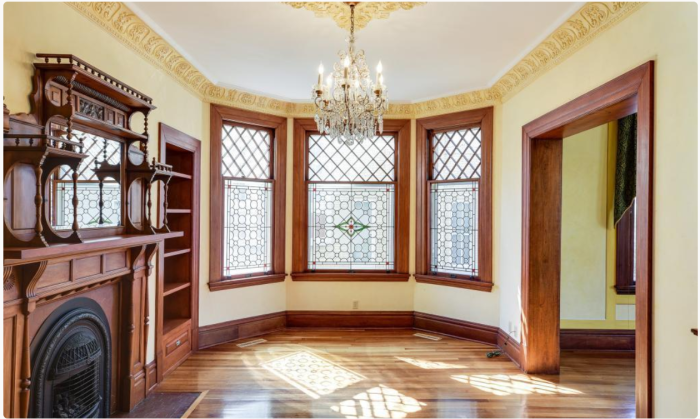
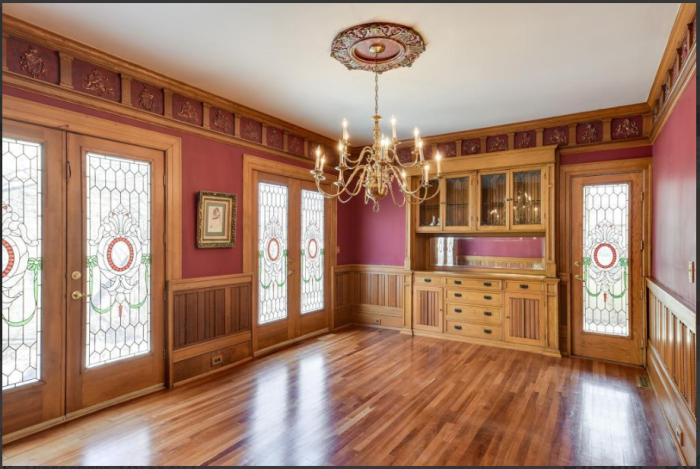
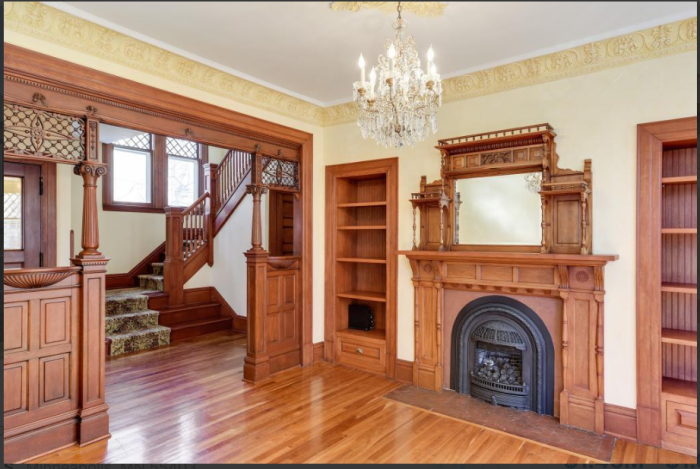
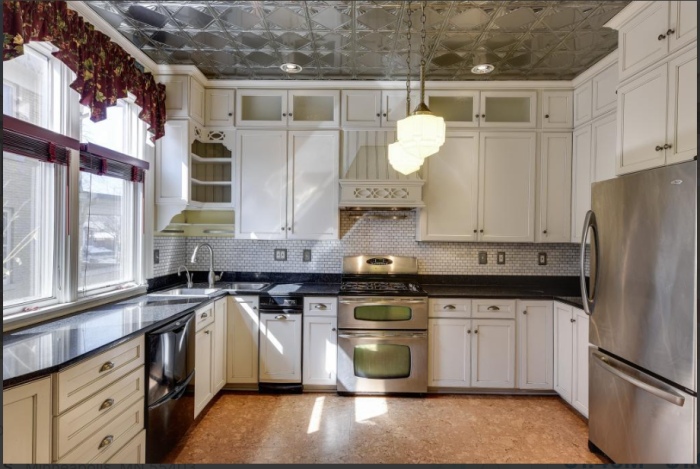
Photographs courtesy of Redfin.com
Modern amenities include a modernized kitchen with a stainless steel refrigerator and a dishwasher, as well as a washer and dryer on the second floor.
If the descriptions of the house aren't quite your fancy, then perhaps the home's past will interest you as we take you through the timeline of 1819 Emerson Ave S.
Who lived in this large and decorated house? In the beginning, all the way back in 1910, our first instance of who the occupants were comes from the census. Marrian Moyer was the head of the household at this time and lived with her extended family. Her family members included her cousin Margaret Riche, her maid Hilda Gustaveson, her brother John Moyer, and her mother J.W. Moyer. Such a large family needed a large house, and this house could indeed provide.
Unfortunately, the family might not have stayed long, as the next stop on our timeline is a "For Sale" advertisement from 1918. The ad boasted that just for the low, low price of $7,800 ($163,375.05 as of June 2025), this house could be anybody's. It also stresses the fact that the house was a fixer-upper at the time, making it a point to say that with a little help, a buyer could end up saving $5,000 ($104,727.60 as of June 2025).
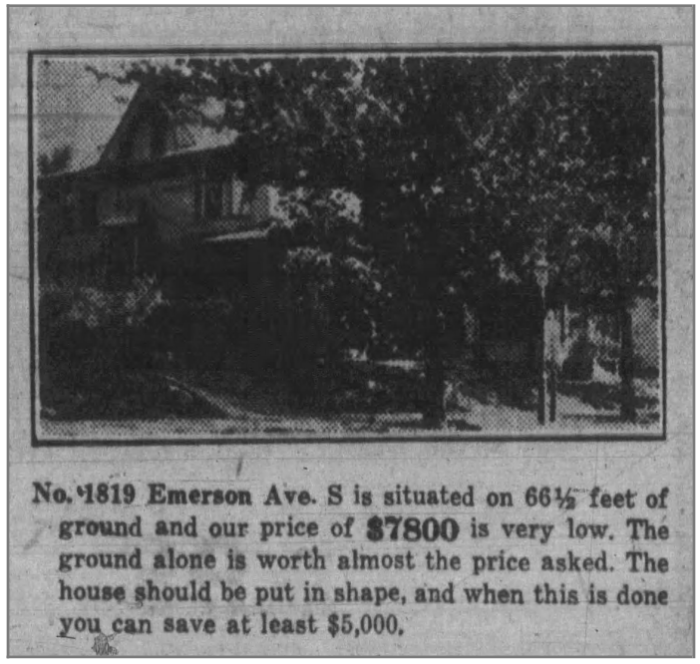
The Minneapolis Journal, Aug. 28, 1918
Carl Johnson may have been the one to take the seller up on their offer, as in the 1920 census, he and his family are listed as the occupants. Carl Johnson lived in the house with his wife Beata, their children, Mark, Karl, and Hildegarde, and Carl's cousin, Agnetta Loftsgard. Carl Johnson was a general practitioner, and while most of his other family members were stated as having no jobs, his cousin Agnetta was listed as a practicing nurse.
Not much is known about the Johnsons at this juncture in our story, but they likely moved out of the house before 1930, when a new family is listed on the 1930 census.
The newcomers, the Junkins, consisted of John Junkin, his wife Kathryn, their two children, Elizabeth and John, and their servant Helen Niska. John Junkin was the vice-president of a bed springs manufacturing company, which probably explains why he could afford such a large house.
From our timeline (see link below), we also have a few photos from the year 1930. There are five in total, consisting of scenes outside of the house. The first one depicts three children in the center of the photo, lined up on the lawn.
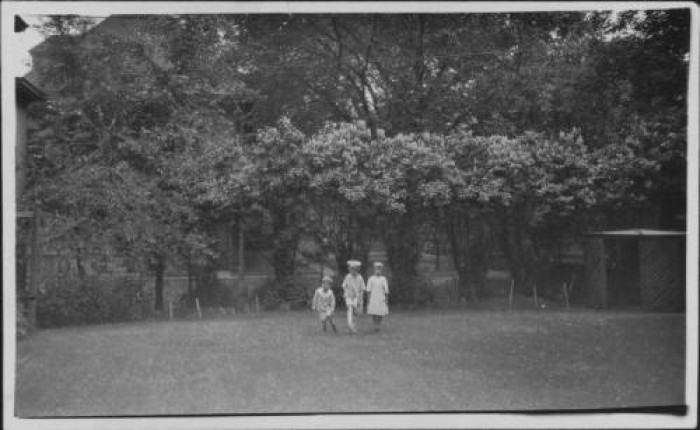
Photograph 1, Oct. 1, 1930
The second photograph shows the front of the house where two women sit on the porch, and a young girl sits on the lawn in the foreground.
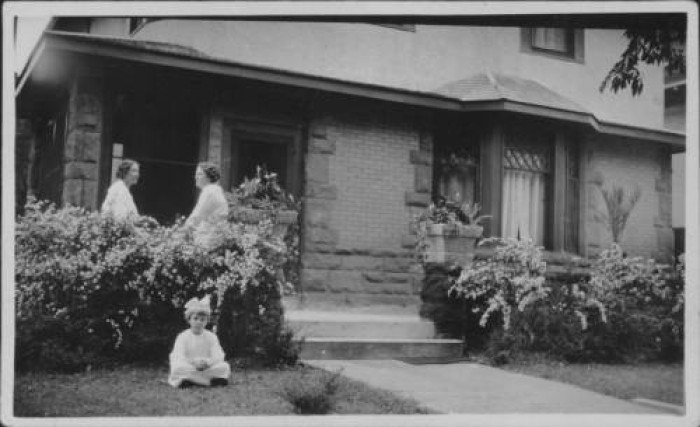
Photograph 2, Oct. 1, 1930
The third is a concise shot of the front of the house, with bushes and plants surrounding the home.
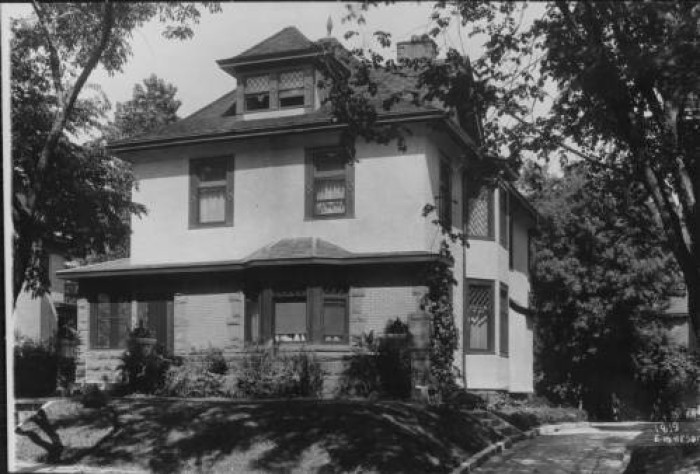
Photograph 3, Oct. 1, 1930
The fourth photograph is similar to the third, except that three people are present. Two people sit on the porch, and off to the right, a small child stands under the bay window.
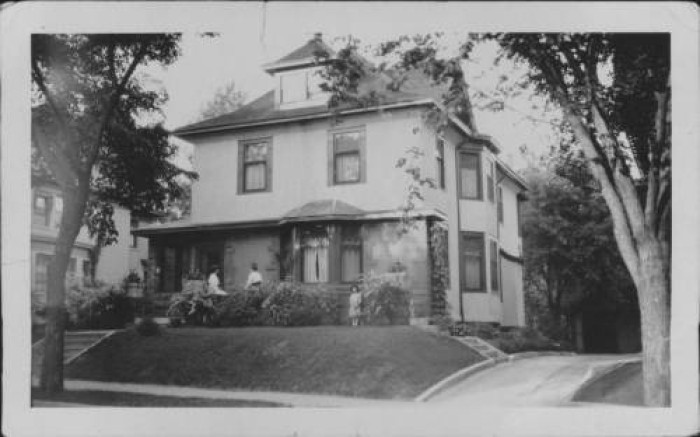
Photograph 4, Oct. 1, 1930
The fifth and final photograph was taken at a different angle of the house, possibly at the back or sides. A man and a woman pose for the camera in front of the flowering bushes.
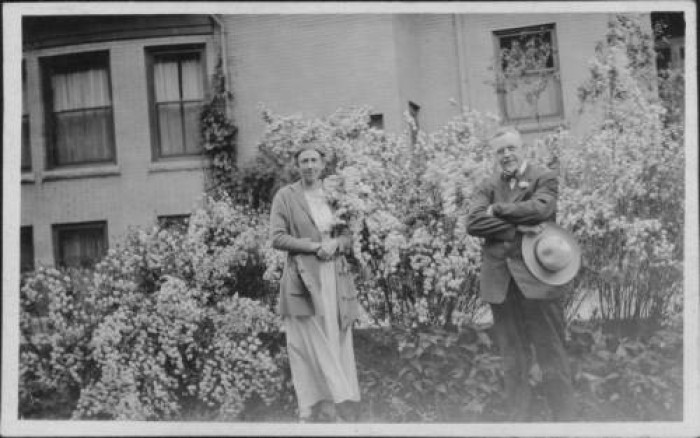
Photograph 5, Oct. 1, 1930
We do not know precisely who these photographs depict, but they are presumably part of the Junkin family or people who knew them.
We now go forward in years to 1935, where on September 29th, Elizabeth Junkin graced the newspaper with a photograph of herself and her dog, Happy. The caption stated that she and her dog often take walks around the lake.
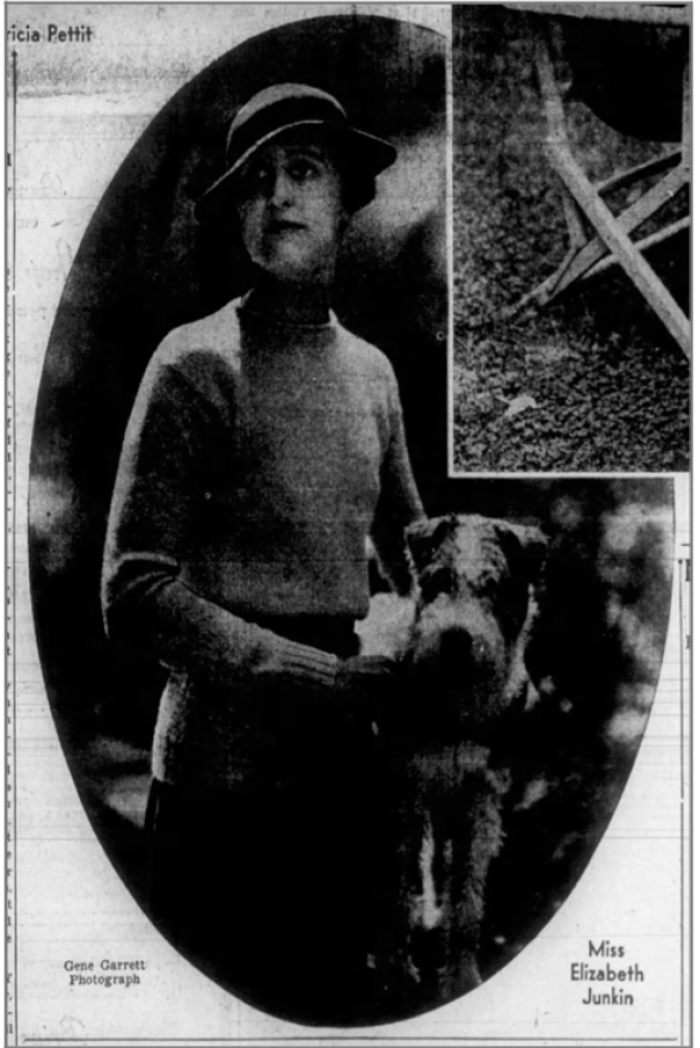
The Minneapolis Journal, Sept. 29, 1935
In addition to taking walks, Elizabeth and the Junkins seemed to have been very active in society, as on December 19, 1935, Kathryn and Elizabeth Junkin planned a tea at their house in honor of a Miss Betty Stevenson Miller.
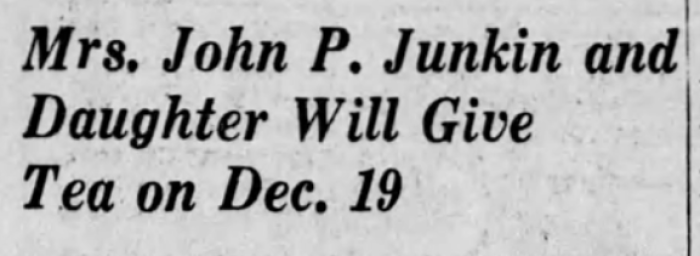
The Minneapolis Star, Dec. 2, 1935
Regrettably, the tea parties and walks around the lake would have ceased by September 30, 1939, as an ad for vacancies in a duplex at 1819 Emerson Ave S appeared in the newspaper. This leads us to the possibility that the home was turned into a duplex after the Junkins moved out.
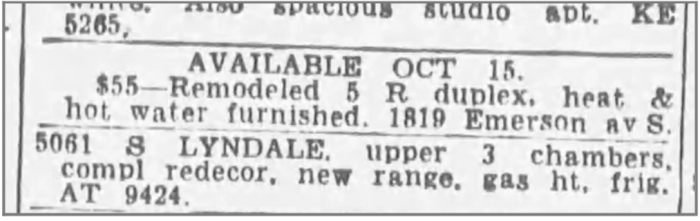
The Minneapolis Times, Sept. 30, 1939
The 1940 census does not give much to that theory, as the only people listed as living at 1819 Emerson Ave S are Owen Smith and his wife Gladys, a salesman and a bookkeeper, respectively. Though if it were a duplex, there may have been no one living in the other section at that time.
Owen and Gladys welcomed a child in January 1949, a son whom they named David. Their other son, Steven, would not be born until February 1950.
The Smith family occupied the house as of 1950; however, six women are also listed as occupants of the house in the census, and they are not listed as relatives of the Smiths. The house could have been run as a boarding house or still as a duplex, explaining why the women show up under the house's address. We do not have any evidence backing this theory at this time, so for now it is just speculation.
There is not much we know about the status of the house after 1950, but in 1971, a man named Scott Drake listed 1819 Emerson Ave S as his address when he applied for a marriage license. This is the only known instance we have of Scott Drake living at the house.
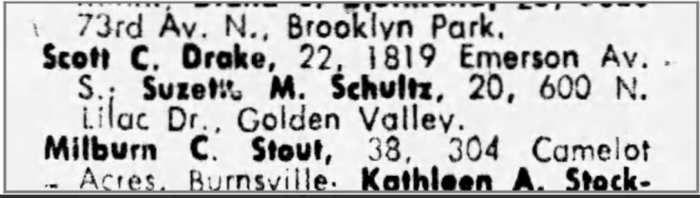
The Minneapolis Star, Nov. 5, 1971
Soon after, in 1976, Owen Smith, who still lived at the house with his wife Gladys, died at age 71. He left behind Gladys, their two children, and a brother named Clifford.
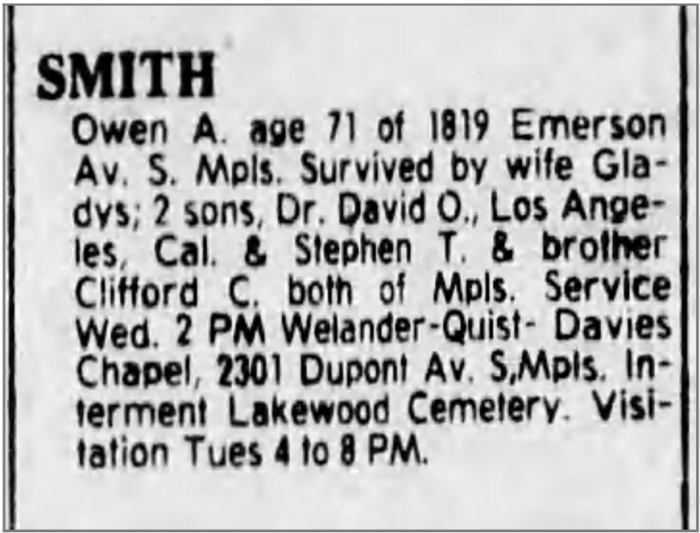
The Minneapolis Star, Sept. 13, 1976
We must skip a few years to arrive at our next stop, when the house was up for sale once again. This time, on October 19th, 2008, the house was advertised in the Star Tribune, but no price was listed.
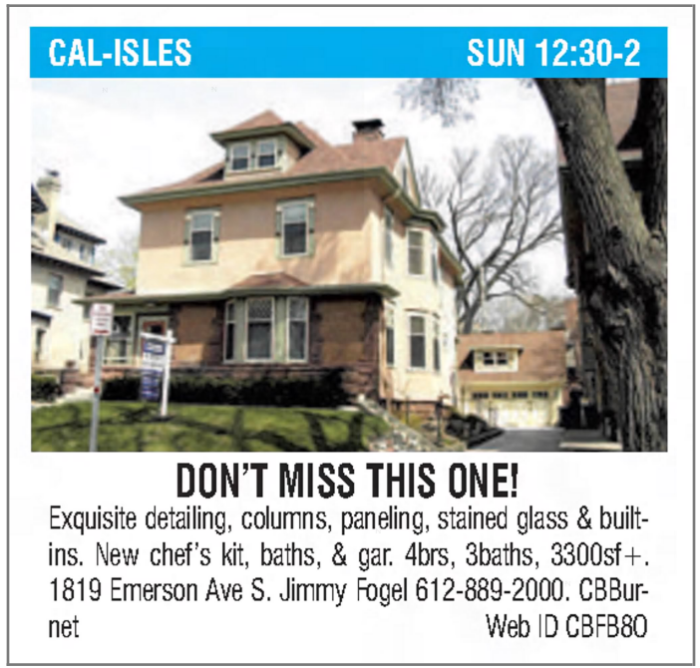
The Star Tribune, Oct. 19, 2008
After 2008, the house was last sold in 2019, for $680,000. Currently, according to redfin.com, the home has an estimated value of $1,469,735 (as of August 2025).
Today, the home remains private property and is not on the market., but if you are still interested and would like more information, our 1819 Emerson Ave S timeline is clamoring for visitors.
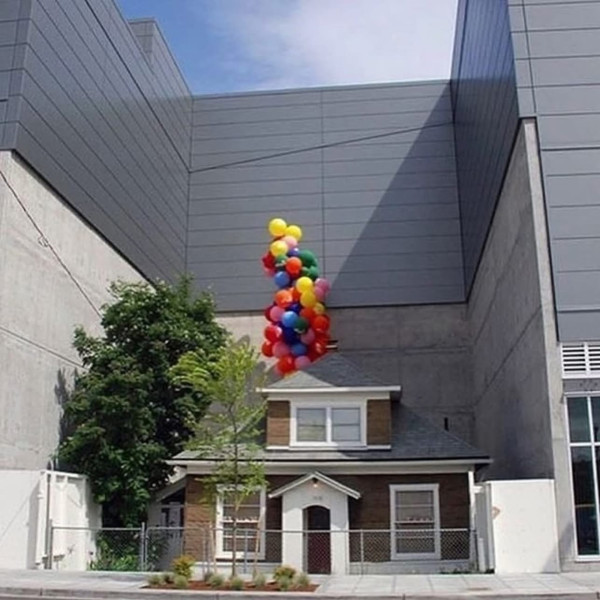
Not the Up House—But Even Better: Edith Macefield Said No to $1 Million, So They Built a Mall Around Her
You may have heard about the one-bedroom house in Seattle that blocked a mall.
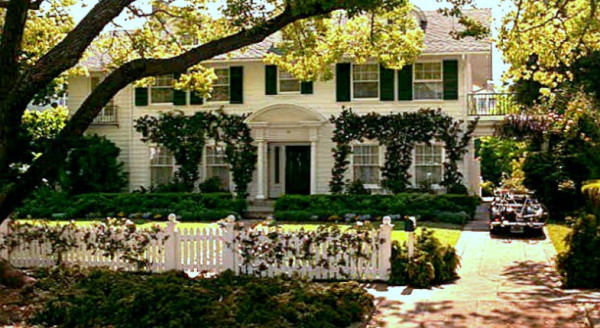
The Iconic Father of the Bride House and Its Real History
The 1991 movie Father of the Bride is known for many things, but none stand out more than the Banks' house. Come with us to explore the real life history of the home!
What's the different between a deed and title?
Unlocking Real Estate Jargon: Difference Between a Title and a Deed. In the complex world of property ownership, do you know the distinction between these two crucial terms?

Top 5 Reasons Properties are Abandoned
Are you interested in history's mysteries? You can find abandoned properties all over the world when you know where to look.
