The Story of 1807 Dupont Avenue South: A Minneapolis Queen Anne With 120 Years of History
Step inside 1807 Dupont Avenue South, a historic Queen Anne home in Minneapolis. From three generations of the Jamieson family to a modern restoration, this house has seen it all.
August 28, 2025
1807 Dupont Avenue South: History of a Historic Queen Anne Home in Minneapolis
Some houses are more than just places to live—they’re storytellers. Tucked along Dupont Avenue in Minneapolis, 1807 Dupont Avenue South is one of those homes. Built in 1902 by architect T.P. Healy, this house has seen it all: well-to-do families, cross-country travelers, ambitious young women just starting out, and even decades as a boarding house. Over 120 years later, its story still says a lot about the city that grew up around it.
Stately Beginnings
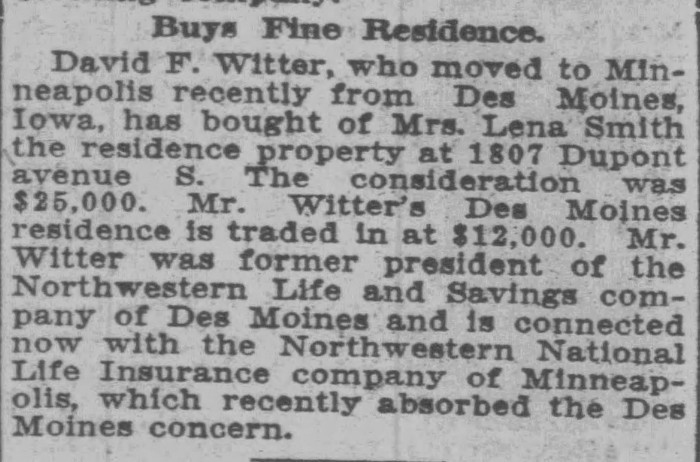
In 1902, Minneapolis architect T. P. Healy—nicknamed the “King of the Queen Anne”—oversaw construction of the house at 1807 Dupont Avenue South, one of many spectacular homes he designed across the city. Healy had arrived in Minneapolis in 1883 and spent over two decades shaping its neighborhoods with his signature style. Just a year later, in 1903, his daughter Lena Smith sold the newly built residence for $25,000 to David Witter, a well-known financier from Des Moines, Iowa. The Des Moines Register described Witter as “one of Iowa’s best known citizens,” serving as vice president of Marquardt Savings Bank and president of Northwestern Life and Savings Company. After moving to the Twin Cities, Witter was active in Minneapolis politics and finance before retiring in 1906.
Shaping the City: Thomas Jamieson and Life at 1807 Dupont Avenue South
That same year, the property—then known as the Witter House—was purchased by Thomas A. Jamieson, a rising star in Minneapolis real estate. Starting in small-scale lending, Jamieson quickly built a name in insurance, loans, and property deals. Interviewed in 1901 at just 34 years old, he told the Minneapolis Times: “There is going to be more building next year than there has been this.” His prediction was right—and his success afforded him the impressive Dupont Avenue mansion.
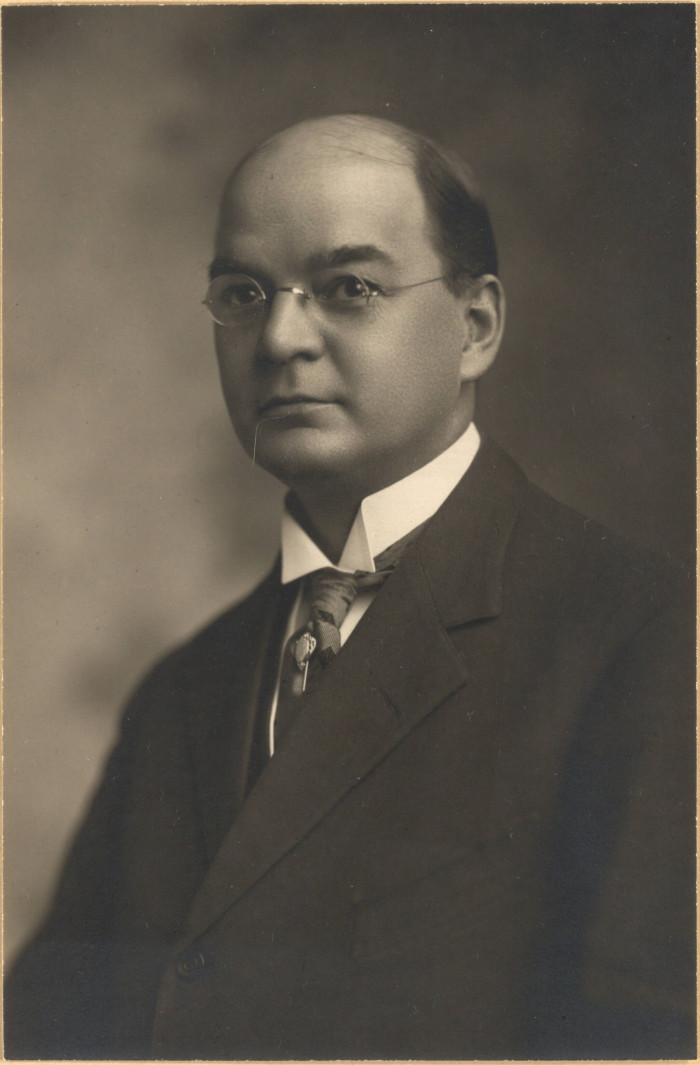
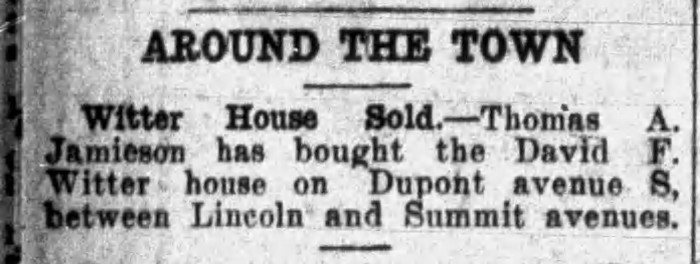
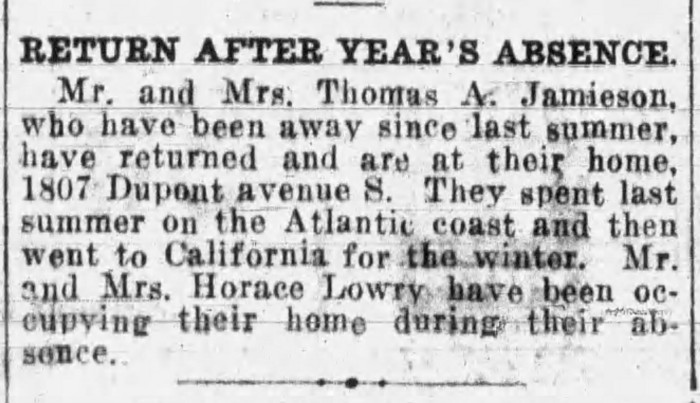
Jamieson lived there with his wife Jennie and their son Carson. The family loved to travel, even spending a full year touring New England and the Atlantic coast before wintering in Pasadena, California, in 1914. While they were away, the house was occupied by Horace Lowry, son of the influential Minneapolis figure Thomas Lowry, for whom many Twin Cities landmarks are named. The arrangement spoke to the Jamiesons’ social standing—having a Lowry “house-sit” was no small thing.
The Next Generation: Carson Jamieson’s Family Years in Minneapolis
In 1926, after surgery, Jamieson contracted pneumonia and died at just 58. His widow Jennie inherited the estate, while Carson continued his studies at Princeton. Carson later married Mary Margaret Bradshaw in 1929, and the couple moved back into 1807 Dupont with Jennie. Like his parents, Carson loved travel—newspaper clippings from 1933 note the family returning from a trip spanning Mauritania to Havana. After Jennie’s passing in 1934, Carson, Margaret, and their children Louise and Thomas carried on at the house until moving to Hopkins in 1950.
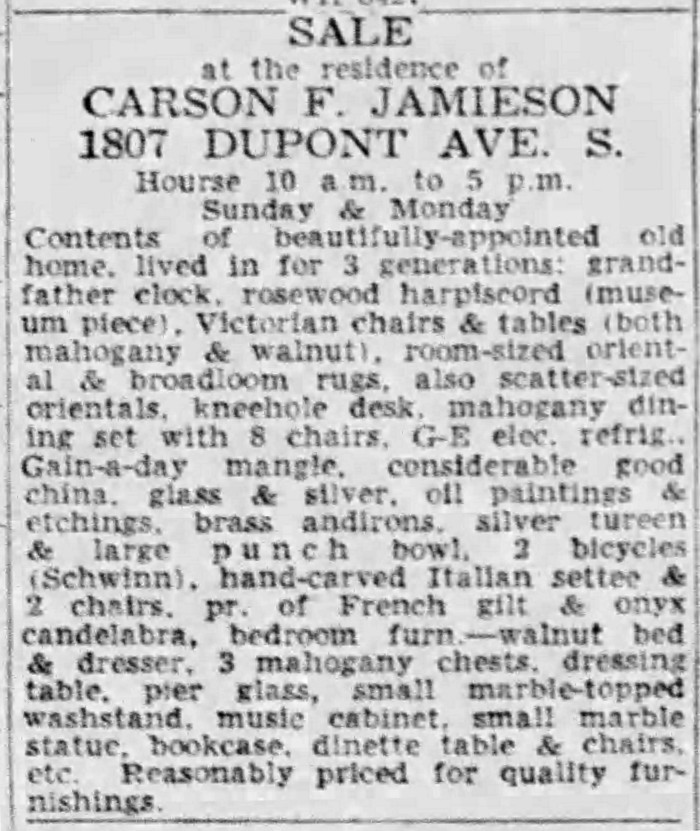
From Family Mansion to Rental Rooms: The Changing Life of 1807 Dupont
That marked the start of a new era. Classified ads began appearing for furnished rooms at 1807 Dupont Avenue South, and the 1950 census lists a lodger in residence. Local realtor Bernard Bryngelson and his wife Elphie lived there for a time, while ads increasingly targeted “girls only” for furnished rooms. Several marriage license applications list young women at the address, hinting that the house had become a kind of in-between stop—a place to live during the years between college and married life.
By the 1950s, many of Minneapolis’s large mansions faced the same fate—split into rentals or income properties. A 1955 listing promoted the home as a “deluxe income home” and “duplexed A-1 brick colonial.” Through the decades, the house cycled between sales listings and room rentals, a far cry from its single-family origins.
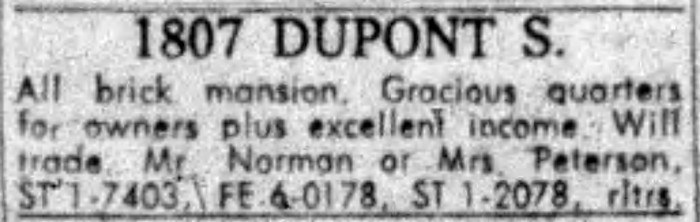
Restoring History: 1807 Dupont Avenue Returns to Its Family Roots
But unlike many of its peers, 1807 Dupont Avenue South got a second chance. In 2012, a new owner purchased the property and lovingly restored it, bringing the Queen Anne-style home back to its original beauty—a spacious, historic Minneapolis house once again serving as a single-family residence, just as Healy intended over a century earlier. The restoration also honors the Jamieson family, who lived here for three generations and helped shape its story. Their decades of family life, travel, and community ties left a lasting imprint on the home, securing its place not only as a remarkable example of Queen Anne architecture but also as a cherished landmark in Minneapolis history.
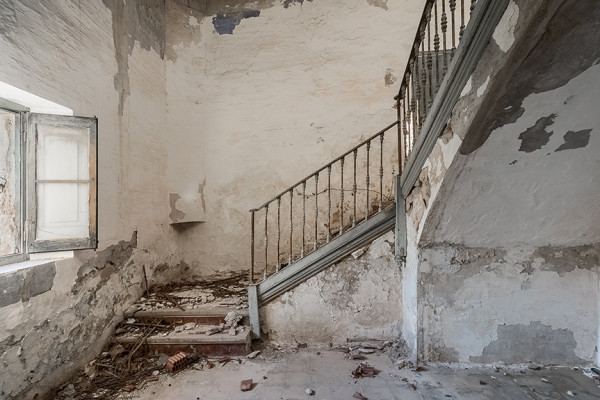
From Vacant to Abandoned, the Evolution of Decay
Routine maintenance is required to prevent any property from decaying. When no one is taking care of a property, time, and weather can quickly deteriorate its structural integrity and become a safety threat to the neighborhood.
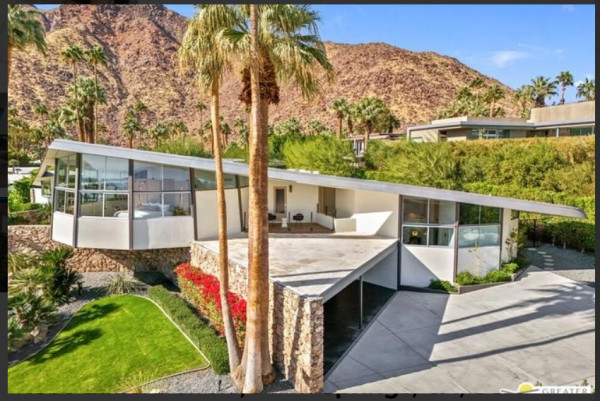
The Elvis Honeymoon Hideaway Home: The House of Tomorrow as the King's Home
Elvis Presley was not the only one who stayed at the house at 1350 Ladera Circle. Who were the other people? And how did they live in "The House of Tomorrow"?

Buy an Entire Abandoned Village in Spain for Under $75,000
Spain is one of the most beautiful countries in the world, treasured for its rich tradition, culture, and heritage.
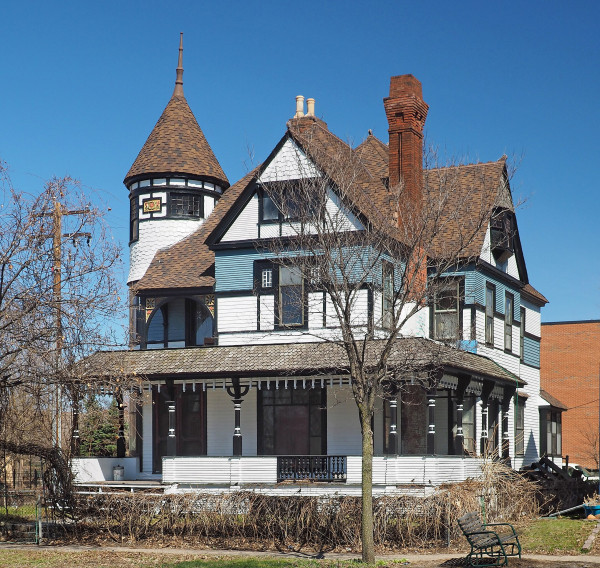
The Legg House: A Victorian Survivor on Park Avenue in Minneapolis
Once home to a diamond merchant, a neighborhood doctor, and even tied to a national FBI case, the Legg House remains one of Minneapolis’ last colorful Victorian survivors.
