The Forgotten Pillsbury Mansion: The Rise and Fall of Frederick C. Pillsbury’s Lost Minneapolis Home
Once one of Minneapolis’s grandest residences, Frederick C. Pillsbury’s mansion didn’t survive the turn of the century. Here’s what happened.
November 11, 2025
Have you ever popped open a tube of Pillsbury™ Cinnamon Rolls and thought to yourself, "Who even is Pillsbury?" Many of you may think of Pillsbury as biscuits, crescents, and even the giggling Pillsbury Doughboy (who celebrated his 60th birthday last October). Back in the late 1800s, however, your average person might have thought of flour as the first thing that came to mind. Flour was the Pillsburys’ main product, and it’s what started it all for Charles Alfred Pillsbury and his uncle, John S. Pillsbury, founders of the company.
But it is not them that we are looking at today. In fact, we will be looking at Charles Pillsbury's brother, Frederick C. Pillsbury, as well as his opulent home.
Frederick C. Pillsbury was born in 1853 to George Alfred Pillsbury and Margaret Sprague Carleton, and was the youngest of three children. As a young adult, he married Alice Goodwin, the daughter of a doctor. As his brother's fortune grew, so did his, and in 1888, part of it was spent building his palatial home at 303 South Tenth St. in Minneapolis, on the same street where his other relatives built their houses.
A sprawling estate, the house at 303 South Tenth St. was made of brick and stone and included three towers. It was also designed in the Romanesque Revival style and contained detailed woodwork as well. The photos below show what it would have been like when Frederick Pillsbury lived there.
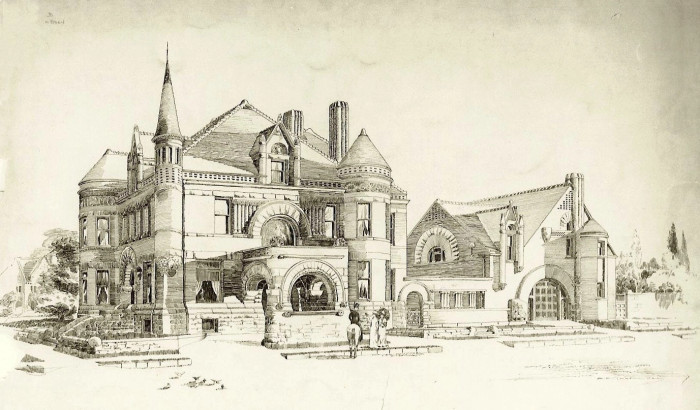
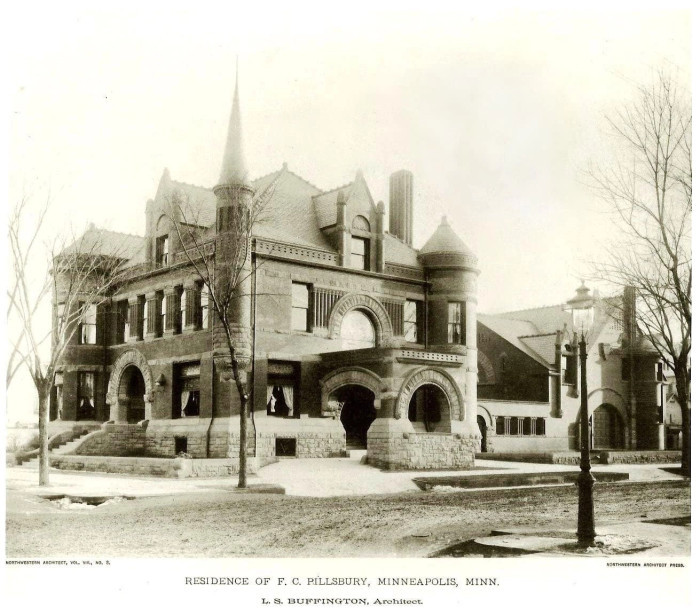
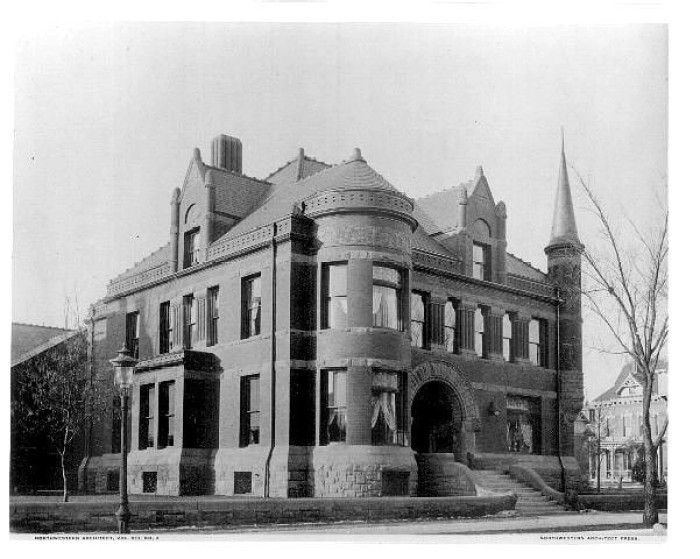
303 South Tenth St. ca. 1888, photos courtesy of Chuck's Toyland
Frederick and Alice had four children: Harriet (born 1879), Carlton (born 1882), Helen (born 1886), and the youngest, Alice (born 1889). We do have some documents from before 1892, including a notice from the newspaper stating that Frederick was one of the directors of the First National Bank of Minneapolis. As for his wife, not much was found from these four years, except for a notice placed in the Star Tribune that stated on which day Mrs. F.C. Pillsbury preferred her callers to visit her.
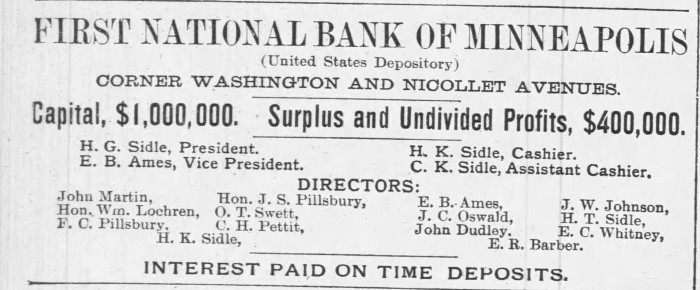
Minneapolis Daily Times, Dec. 22, 1891
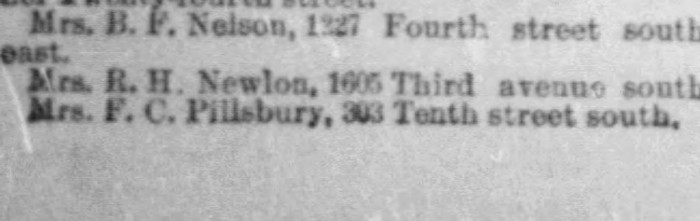
Star Tribune, Apr. 17, 1892
The family lived in relatively peaceful opulence until 1892, when Frederick caught a case of diphtheria. A swift and severe illness, Frederick did not survive for long and died at the age of 38 in May 1892 (the article incorrectly puts him at around 42 years old). His death was a great loss to the community and to his family. The adjacent article, partially shown here, goes into more depth about his death and his contributions to the community (please see the timeline link below for the full article).
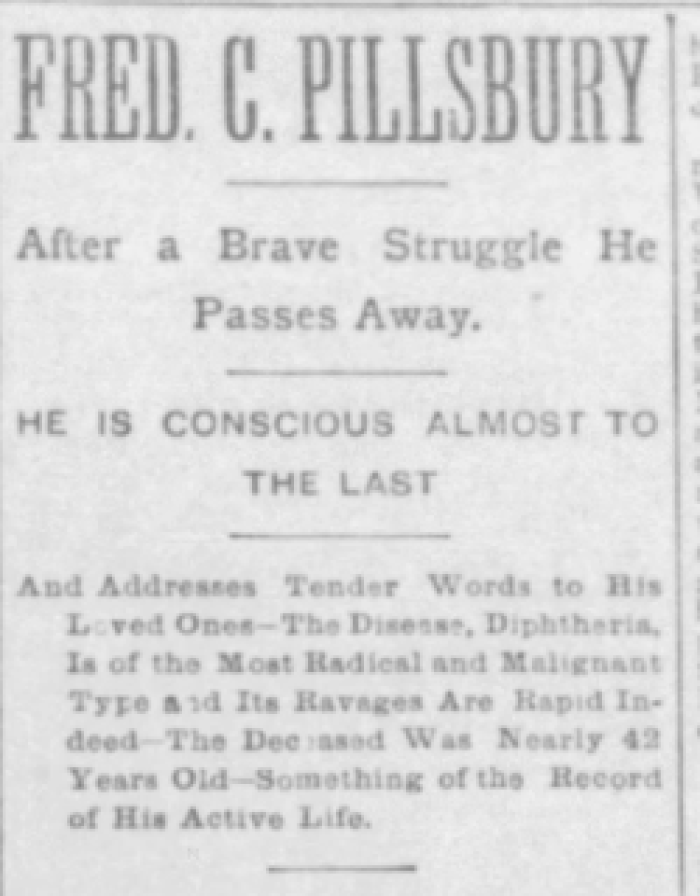
Star Tribune, May 16, 1892
After Frederick's death, his estate had to be taken care of. In July, The Minneapolis Journal stated that it was not as large as the public believed, only being worth around $165,210.12. Estimates valued it at around $500,000. The article then explains that it is because the house and Mr. Pillsbury's insurance were only worth around $65,000 each that the total value was not as high as previously believed.
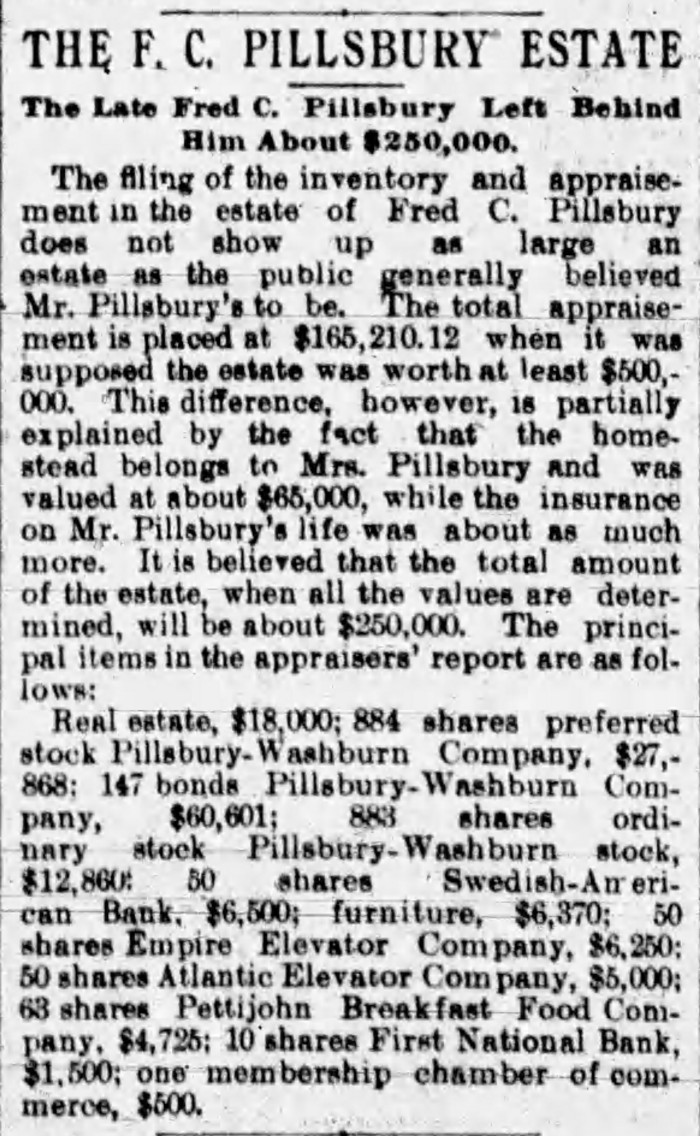
The Minneapolis Journal, Jul. 11, 1892
After the division of the estate, Frederick Pillsbury's widow, Alice, and their children lived in the house for the next few years. From this period, we have a photo taken of the interior of the house from around 1893. It depicts a very ornate room, the kind that does come to mind when one thinks of late 19th-century wealth.
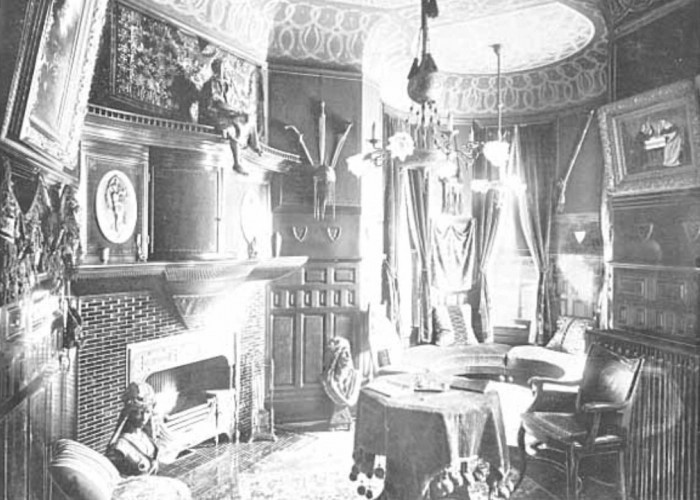
Interior of the home, ca. 1893, photo courtesy of the Minnesota Historical Society
As of the 1900 census, Alice Pillsbury and her children still lived in the house at 303 South Tenth St. They did take on a boarder, Celia Rand, and had three servants live in the house with them: Mary McGrath, Clara Lundburd, and Sopha Johnson. At the time of the census, Alice Pillsbury's three youngest children were still in school.
Her oldest child, Harriet, would marry Harold Osgood Ayer from Savannah, Georgia, in April of 1902. The article partially pictured here goes into excruciating detail about the event, even going so far as to describe the gown the bride, as well as the bridesmaids, were wearing, and what selections of flowers had been chosen for the event (please see the timeline link below for the full article).
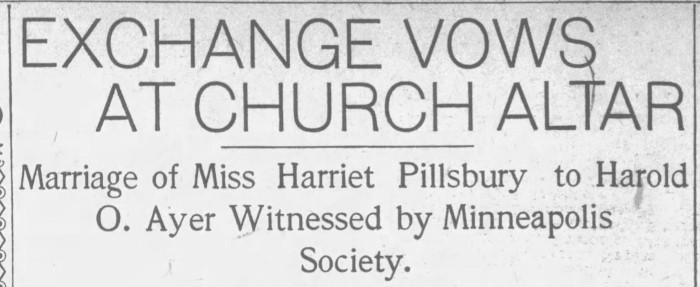
Minneapolis Daily Times, Apr. 24, 1902
As soon as Harriet tied the knot, the wedding bells were ringing again, but this time they were for Alice Pillsbury. In 1903, she married New York State businessman Eugene W. Paige, in a move that shocked everyone but her friends, as it seems that she kept their relationship under wraps for the most part before the wedding. The article also stated that she would be moving to New York after her wedding but would most likely keep the house at 303 South Tenth St. as a winter home for the family.
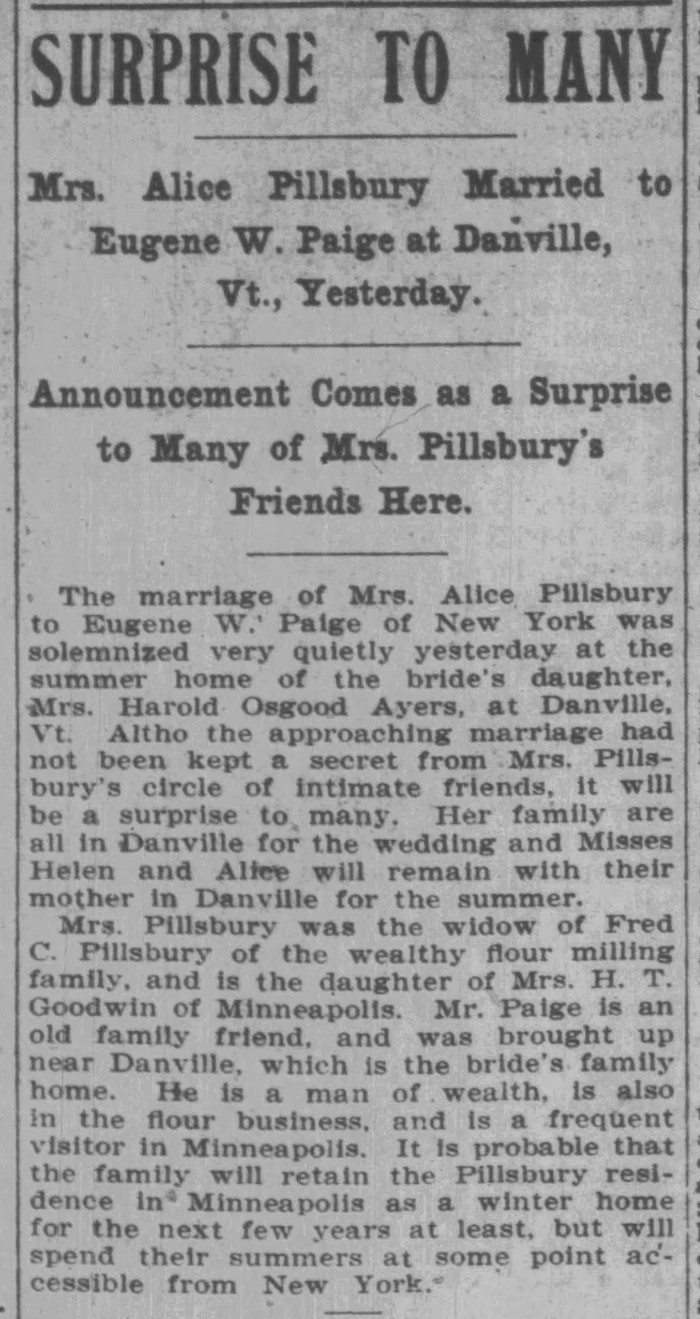
The Minneapolis Journal, Jul. 3, 1903
And indeed, it does seem like they did use the house as a winter home for a little while longer, but unfortunately, it does not look like luck was on the house's side. In 1904, Alice Paige sold the house and moved to Connecticut with her daughters. However, her only son, Carlton, did stay in the area and eventually picked up an interest in motor-vehicle racing.
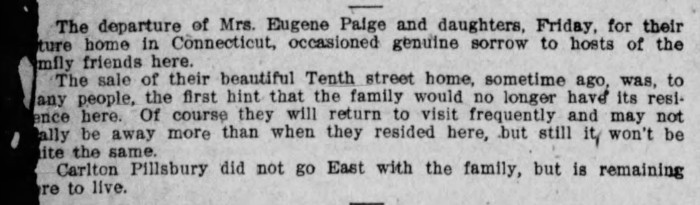
Star Tribune, Jul. 10, 1904
We do not know much about the house after this stage, but we do know that it was demolished sometime around 1916. It was during this time that the mansions on South Tenth St. were being torn down so commercial buildings could be built in their stead. Frederick's mansion, in particular, was razed so that an addition could be added to the Curtis Hotel.
Alas, the opulent mansion of Frederick Pillsbury went out with not so much as a bang, but a sizzle. All we have left is the ghost of what was, and what could have been. If you'd like to learn more about the house or would like to look at the articles in more detail, please see our 303 South Tenth St. timeline for more information.
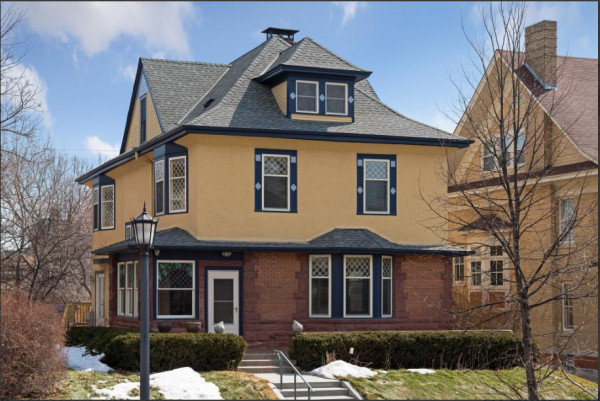
The Marrian Moyer House: A Monument to Past Lives and Architectural Creativity
Join us for a tour of our Marrian Moyer House, a place where the past is still visible in the stained-glass windows and the exquisite woodwork. Learn about the occupants of this home and how they lived in this grand example of early 20th century architecture.
From Vacant to Abandoned, the Evolution of Decay
Routine maintenance is required to prevent any property from decaying. When no one is taking care of a property, time, and weather can quickly deteriorate its structural integrity and become a safety threat to the neighborhood.
Unveiling the past: Your free step-by-step guide to get the most out of your home history research
Have you ever wondered about the history of your home? Who lived there before you? What interesting events took place in your home's past? Your house has a story to tell, and uncovering its history can be one of the most gratifying journeys you embark on.
The Iconic Father of the Bride House and Its Real History
The 1991 movie Father of the Bride is known for many things, but none stand out more than the Banks' house. Come with us to explore the real life history of the home!
